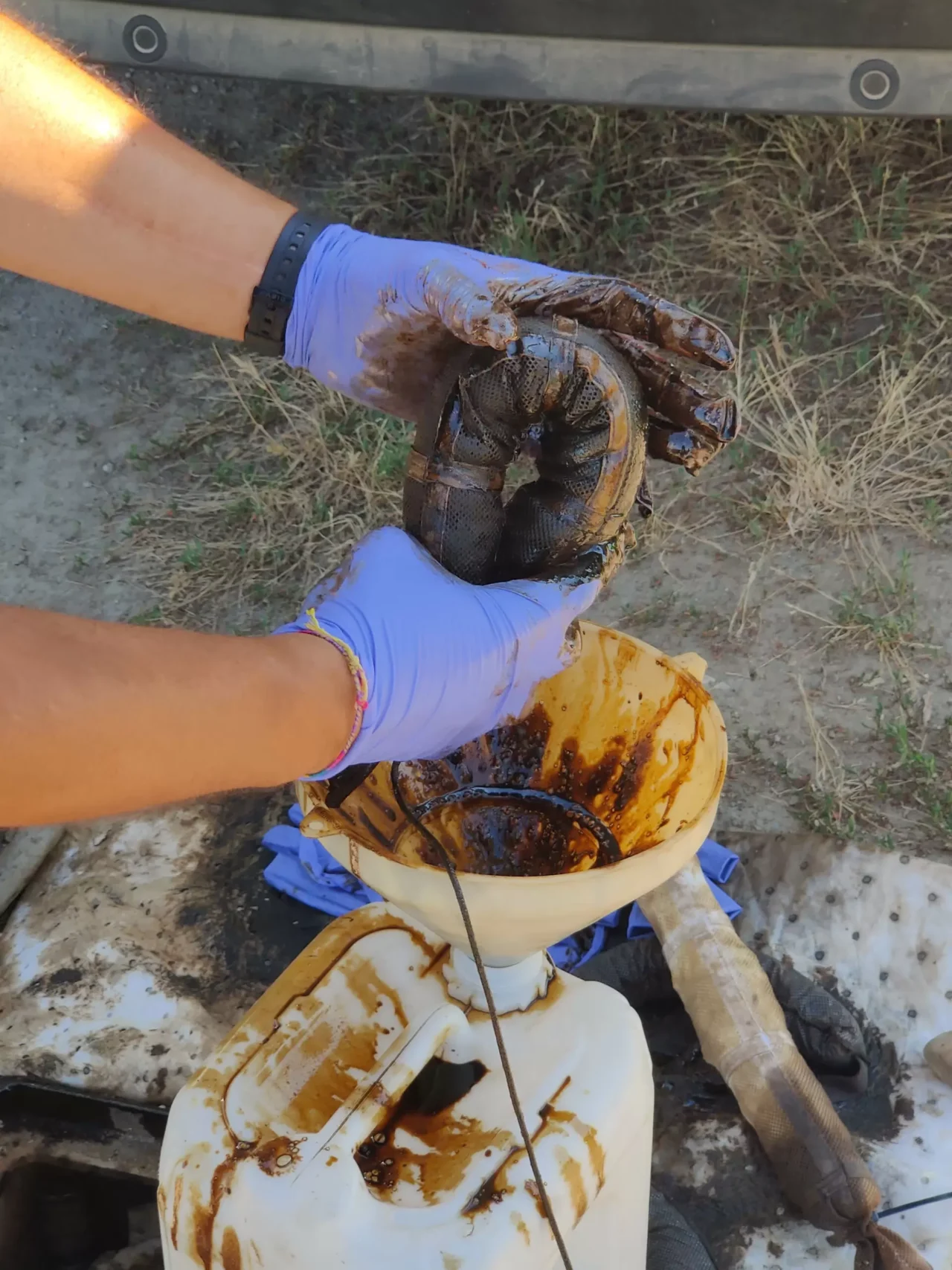
Oil spills on land happen more often than people think: at industrial sites, farms, highways, refineries, and even residential areas. When they occur, the impact can be severe: soil degradation, groundwater contamination, long-term cleanup operations, regulatory consequences, and high financial losses.
In this article, we explain what an oil spill on land is, what causes it, the effects to expect, and most importantly, how to clean it up safely and effectively using proven methods and professional-grade tools.
An oil spill on land refers to the accidental release of petroleum, lubricants, diesel, hydraulic fluids, or other hydrocarbons onto soil surfaces. These incidents occur across diverse settings, from remote pipeline corridors to busy industrial zones. While many people associate spills with oceans, land incidents are far more frequent and often more immediate in their consequences.
Typical sources include:
For many of these scenarios, understanding what causes oil spills is crucial to implementing safer, more reliable operations.
Land-based spills are often triggered by:
Historical data show that where oil spills happen most frequently tends to correlate with areas involving high-pressure transfers, aging infrastructure, or heavy vehicle movement.
The effects of oil spills on land can be severe and long-lasting. Soil becomes hydrophobic, preventing water infiltration. Hydrocarbons can kill vegetation or inhibit growth for years. Toxic components may seep into groundwater or nearby waterways.
Some oil spills on land have escalated into regional environmental emergencies, particularly when contaminants migrate beneath the surface. In extreme cases, wildlife exposure can mirror some oil spill effects on animals typically associated with offshore incidents.
Spills that reach rivers or coastal zones may eventually contribute to oil spill effects on oceans, amplifying the damage.
Cleaning an oil spill on land requires a systematic, safety-driven approach. Below are the essential steps used by professionals worldwide.
Before approaching the spill:
At this stage, many responders also confirm initial data for reporting and compliance facts about oil spills that help classify the incident severity.
The priority is stopping the spread before oil reaches drains, vegetation, or water channels. Containment tools that help isolate the spill include sorbent socks around machinery bases or perimeter zones. In larger incidents, responders may deploy booms for oil spills to create a physical barrier and prevent lateral migration.
If the spill risks moving downhill or reaching a natural channel, rapid action with the right oil spill solutions is critical to avoid escalating the damage.
Once contained, responders begin actively absorbing hydrocarbons. Depending on the surface and spill size, several options exist:
These products rely on advanced oil spill absorbent materials engineered to trap hydrocarbons quickly, even in cold or humid conditions.
After absorption, all used sorbents and contaminated soil must be collected and placed in approved hazardous-waste containers. Examples include:
Proper disposal is essential to avoid recontamination of the site or nearby ecosystems.
Depending on the material spilled and the surface affected, responders may apply degreasers or cleaning agents. On permeable terrain, additional soil excavation may be required.
In severe cases, remediation teams use biological treatments or vacuum equipment such as oil skimmers when standing liquid accumulates in depressions.
Large spills, or those affecting water bodies, may require reporting to environmental authorities. Industrial sites often follow compliance protocols that reference historical benchmarks, including events like the Odyssey oil spill, which reshaped global spill-response standards.
If much of the absorbent inventory has been used, teams should immediately restock oil spill kits to remain prepared for future emergencies. Many major facilities maintain refill programs to guarantee uninterrupted readiness.
Effective intervention depends heavily on preparation and high-quality equipment. Industrial sites, logistics hubs, energy facilities, and manufacturing plants typically rely on:
Having the right equipment also supports training programs on how to prevent oil spills, reducing the likelihood of recurring incidents.
In addition, maintaining appropriate tools supports compliance and provides practical knowledge for mitigating future risks, especially in regions prone to famous oil spills or chronic contamination.
Oil spills on land require swift, structured, and well-equipped responses. Key takeaways include:
Understanding how to clean an oil spill on land empowers industries and communities to protect soil, water, and surrounding ecosystems more effectively.
Hydrocarbons can inhibit plant growth, destroy root systems, and disrupt soil structure. Severity depends on spill size, soil type, and response time.
Immediately. The longer petroleum remains on soil, the deeper it penetrates and the more expensive remediation becomes.
Often yes, because land provides physical access and containment is simpler. However, deep contamination or groundwater migration can make land spills extremely complex.
Sorbents like pads, mats, loose absorbents, and polymer-based tools. FoamFlex and similar high-efficiency products offer rapid uptake and reduced waste volume.
Regulations differ by country but typically involve environmental agencies, hazardous-waste laws, and reporting thresholds for industrial facilities.
Yes. Industrial sites follow formal emergency and environmental compliance procedures, while residential spills focus on rapid containment and safe disposal.
NOAA Office of Response and Restoration
ITOPF – Technical Resources and Case Studies
U.S. Environmental Protection Agency (EPA) – Emergency Response
ScienceDirect – Research on Hydrocarbon Soil Contamination
When oil spills occur, fast, sustainable action is critical. T1 Solutions offers advanced, eco-conscious oil spill solutions designed for real-world impact. Whether you’re cleaning oil spills in the ocean or on land, our reusable absorbent technology offers both environmental and economic advantages, making cleanup efficient and responsible.
You need to load content from reCAPTCHA to submit the form. Please note that doing so will share data with third-party providers.
More InformationYou are currently viewing a placeholder content from Turnstile. To access the actual content, click the button below. Please note that doing so will share data with third-party providers.
More InformationYou are currently viewing a placeholder content from Vimeo. To access the actual content, click the button below. Please note that doing so will share data with third-party providers.
More InformationYou are currently viewing a placeholder content from YouTube. To access the actual content, click the button below. Please note that doing so will share data with third-party providers.
More InformationYou need to load content from reCAPTCHA to submit the form. Please note that doing so will share data with third-party providers.
More InformationYou are currently viewing a placeholder content from reCAPTCHA. To access the actual content, click the button below. Please note that doing so will share data with third-party providers.
More Information