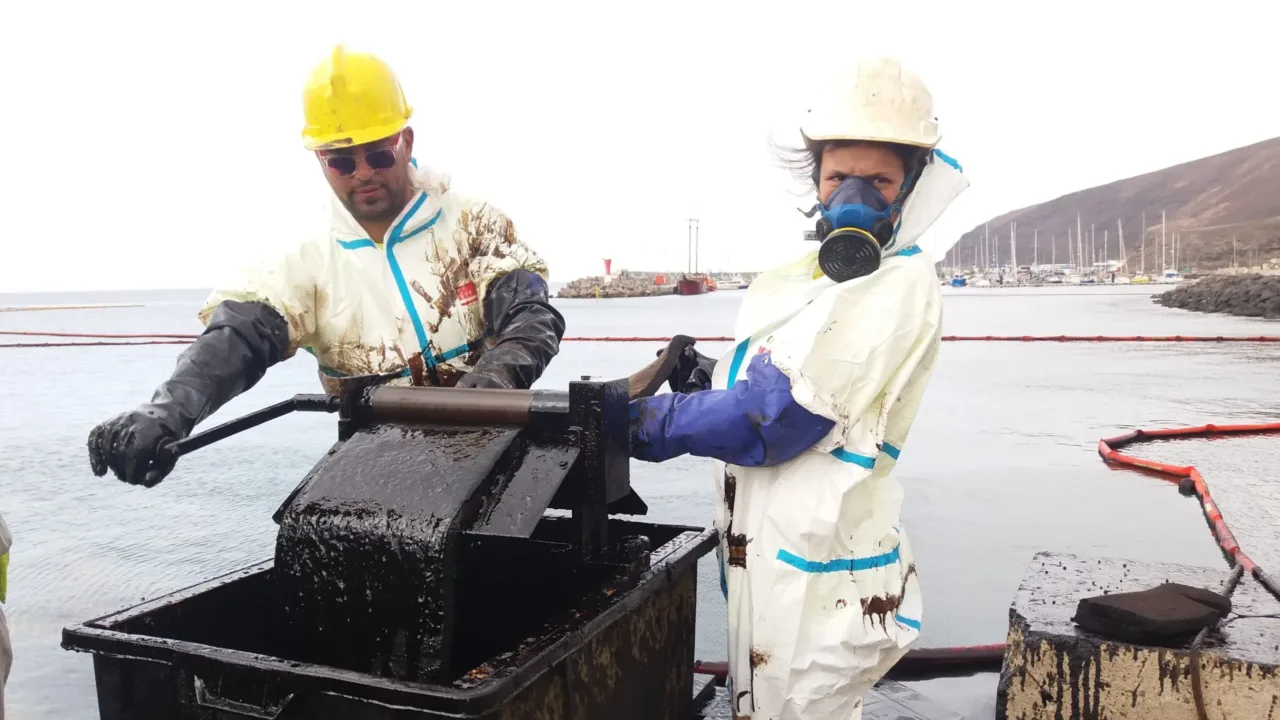
Secondary containment is a critical part of environmental protection, designed to prevent spills of hazardous liquids from reaching soil, water, or other sensitive areas. From fuel storage tanks to chemical processing facilities, secondary containment ensures that if a primary container leaks, the liquid is safely captured.
In this article, we explore what secondary containment is, its types, solutions, regulatory requirements, and how it helps protect both industries and the environment. We draw on authoritative sources such as the EPA, OSHA, WorkSafe New Zealand, and EGLE, giving you reliable guidance for prevention and compliance. This guide also highlights practical oil spill solutions and operational tools to minimize environmental damage.
Secondary containment refers to a backup system designed to capture leaks or spills from primary containers such as tanks, drums, or process vessels. Its main purpose is to prevent hazardous liquids from escaping into the environment, reducing risks to soil, waterways, and human health. Secondary containment can be passive (a physical barrier like a berm or sump) or active (systems with alarms, pumps, or automatic shut-offs).
For instance, a chemical storage tank may sit inside a concrete berm. If the tank ruptures, the secondary containment prevents the chemical from reaching the soil or nearby watercourses. Understanding what causes oil spills helps in planning these containment measures effectively.
Secondary containment reduces environmental, legal, and financial risks by:
Both approaches can be combined for maximum protection. For example, a secondary spill containment system may include a double-walled tank (passive) plus leak sensors and an alarm (active).
Identifying where oil spills happen most frequently helps prioritize containment solutions and emergency planning.
Secondary containment solutions can be portable, operational, or structural, depending on the application. Test 1 products excel in operational containment and rapid deployment for emergencies.
Operational tools such as oil spill solutions, mats, pads, and skimmers complement structural containment and make it easier to comply with secondary containment requirements while limiting the effects of oil spills on animals and ecosystems.
Regulatory requirements for secondary containment vary by country but share the same goal: preventing hazardous releases into the environment.
In the United States, the Environmental Protection Agency (EPA) outlines specific secondary containment requirements under 40 CFR 264.175 and 40 CFR 267.195. These rules apply to facilities storing hazardous waste or substances that pose a threat to water and soil.
Key principles include:
The Occupational Safety and Health Administration (OSHA) also includes spill prevention and control standards under 29 CFR 1910.106, emphasizing safety in chemical handling and storage.
In other regions, such as Europe and New Zealand, local environmental agencies like the Health and Safety Executive (HSE) and WorkSafe NZ enforce similar guidelines, ensuring secondary containment systems are built, operated, and inspected to prevent contamination. Following these guidelines ensures compliance and reduces risks associated with oil spills on land, chemical leaks, and effects of oil spills in sensitive areas.
Effective secondary containment is essential for industrial safety, environmental protection, and regulatory compliance. Combining structural systems with operational tools like oil spill kits, oil absorbent mats, oil absorbent pads, sorbent socks, oil spill mops, oil spill absorbent materials, booms for oil spills, and oil skimmers ensures rapid response.
Understanding facts about oil spills and what causes oil spills helps industries plan better, minimize risks, and protect ecosystems from oil spill effects on oceans, wildlife, and human populations.
OSHA requires employers to implement containment measures that prevent hazardous liquid spills from reaching soil or water, following 29 CFR 1910.106.
It prevents environmental contamination, reduces cleanup costs, and ensures compliance with EPA and OSHA regulations.
Yes, for most facilities storing oils, fuels, or hazardous chemicals. Regulatory agencies require it as part of spill prevention and control plans.
Common materials include steel, concrete, polyethylene, and composite coatings designed to resist corrosion and chemical degradation.
Not typically. Absorbents such as oil spill absorbent materials or pads are part of cleanup efforts, not structural containment.
Failure to comply may result in environmental damage, heavy fines, and possible legal action from regulatory bodies.
OSHA – 29 CFR 1910.106: Flammable Liquids.
WorkSafe New Zealand – Secondary Containment Systems Guidance.
Michigan Department of Environment, Great Lakes, and Energy (EGLE) – Secondary Containment Guidance.
When oil spills occur, fast action is critical. Test 1 Solutions offers FoamFlex reusable absorbents for oil spill response. Whether you’re cleaning oil spills in the ocean or on land, FoamFlex absorbs up to 34 times its weight and can be wrung out and reused up to 200 times.
You need to load content from reCAPTCHA to submit the form. Please note that doing so will share data with third-party providers.
More InformationYou are currently viewing a placeholder content from Turnstile. To access the actual content, click the button below. Please note that doing so will share data with third-party providers.
More InformationYou are currently viewing a placeholder content from Vimeo. To access the actual content, click the button below. Please note that doing so will share data with third-party providers.
More InformationYou are currently viewing a placeholder content from YouTube. To access the actual content, click the button below. Please note that doing so will share data with third-party providers.
More InformationYou need to load content from reCAPTCHA to submit the form. Please note that doing so will share data with third-party providers.
More InformationYou are currently viewing a placeholder content from reCAPTCHA. To access the actual content, click the button below. Please note that doing so will share data with third-party providers.
More Information