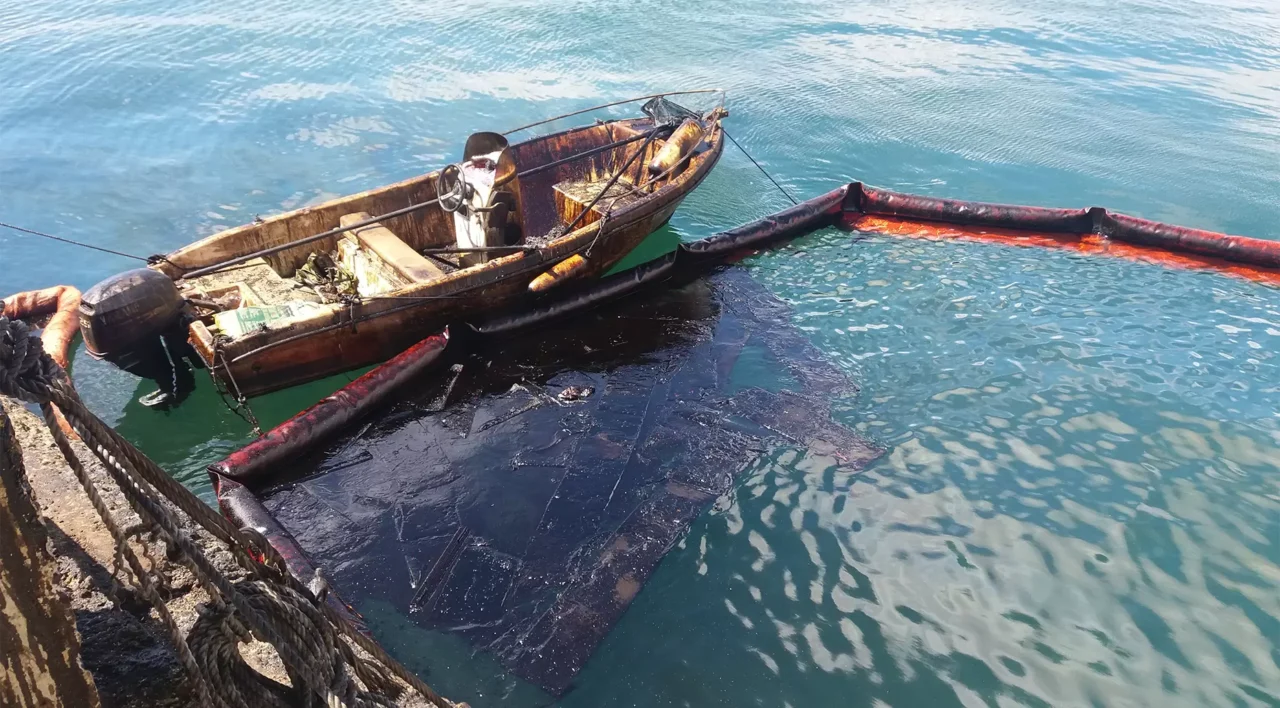
Oil spills are among the most challenging environmental disasters to manage. They pollute oceans, rivers, and coastlines, causing severe harm to ecosystems and local economies. Among the many oil spill solutions available, oil skimmers are considered one of the most widely used and recognizable response tools.
But what are skimmers for oil spills, and do they really work? In this article, we’ll provide a comprehensive overview of how oil skimmers operate, where they are applied, the different types available, and their pros and cons. We’ll also look at how innovative absorbent technologies, such as Foam Flex by Test 1, can complement or even outperform traditional skimmers in certain scenarios. By the end, you’ll understand not only how skimmers work but also how they fit into the larger strategy of oil spill containment and recovery.
Oil skimmers are mechanical devices designed to remove oil from the water’s surface. Their primary function is to separate hydrocarbons from water, making them vital during oil spill response operations. Depending on the design, an oil skimmer can recover light oils like diesel and gasoline, or heavier, more viscous oils such as crude oil, bunker fuel, and lubricants.
Oil skimming is an essential step in minimizing the effects of oil spills. By physically removing hydrocarbons before they spread further, oil spill skimmers help protect marine life, reduce shoreline contamination, and facilitate subsequent cleanup operations. Unlike chemical dispersants, skimmers aim to recover oil, not just break it apart, which makes them a preferred choice for environmentally sensitive regions where oil spill effects on animals and ecosystems are most severe.
Oil skimmers are deployed in a wide range of contexts, depending on the spill size, type of oil, and environmental conditions. Typical applications include:
This versatility explains why floating oil skimmers are found in both large-scale spill response kits and smaller belt oil skimmer systems in industrial facilities. Their adaptability means they can be tailored to both continuous operations in factories and large-scale emergencies in open waters, making them a cornerstone of global spill management strategies.
Not all skimmers work in the same way. Different types of oil skimmers have been developed to adapt to varying spill conditions, oil viscosities, and water environments. Below we detail the main categories and their characteristics.
By understanding the pros and limitations of each type, responders can deploy the right tool for the right situation. Selecting the wrong skimmer may lead to excessive water collection, poor recovery efficiency, or complete ineffectiveness in rough seas. That’s why training and knowledge are as important as the equipment itself, particularly given where oil spills happen – from offshore rigs to inland rivers and industrial plants.
A weir skimmer works by allowing oil to flow over a floating barrier (the “weir”) into a collection sump, where it is pumped away.
Weir skimmers are often used in large offshore spills where speed is essential, but they are less effective for selective recovery. Since they lack oil-attracting surfaces, they tend to require additional separation equipment downstream, which can raise costs and time for treatment.
“Oleophilic” means oil-attracting. These skimmers use rotating surfaces that oil sticks to, while water is repelled. Subtypes include:
These are widely used because they are efficient at targeting hydrocarbons while minimizing water intake. Oleophilic designs are particularly effective in calm waters where oil remains concentrated, and they are valued for their durability and adaptability across multiple oil types.
These systems use pumps to vacuum oil directly from the water surface. They are versatile and can handle a wide variety of oils, but they often require more energy and maintenance.
Vacuum skimmers are especially effective in confined areas, such as harbors or near shorelines, where direct suction can quickly recover concentrated patches of oil. However, their reliance on strong pumping systems makes them less practical for remote or large offshore spills.
Belt oil skimmers use a continuous moving belt made of oleophilic material. The belt dips into oily water, lifts hydrocarbons, and scrapes them into a collection container.
These skimmers excel in removing floating layers of tramp oil from coolants and process water, extending fluid life and reducing disposal costs. While not suited for open-water disasters, their role in everyday industrial pollution control is critical.
(To be inserted at upload stage as requested)
Like all response technologies, skimmers for oil spills offer both strengths and weaknesses.
In addition, skimmers provide a mechanical recovery method that avoids introducing chemicals into the environment. This makes them an attractive option in sensitive areas, such as near fisheries, coral reefs, or coastal reserves. They also complement broader strategies, including secondary containment, that aim to reduce risk and environmental exposure.
Another limitation is cost: larger skimmers are expensive to purchase, operate, and maintain. Moreover, the logistics of deploying heavy equipment quickly can delay recovery efforts in remote locations. For context, famous oil spills like the Odyssey oil spill showed how difficult and costly mechanical recovery can become when massive amounts of crude are released into the sea.
Oil skimmers play a critical role in oil spill response. They are proven, reliable, and often the first line of defense when hydrocarbons reach the water’s surface. However, they are not always sufficient alone. For maximum effectiveness, skimmers must be combined with:
This is where Foam Flex by Test1 adds a new dimension. Unlike traditional skimmers, Foam Flex is an advanced absorbent:
By combining oil spill skimmers with Foam Flex absorbents, operators achieve faster and cleaner oil spill solutions. Foam Flex doesn’t replace skimmers but complements them, ensuring that even residual oil left behind is captured efficiently.
So, how do oil skimmers work in real scenarios? They are mechanical devices that separate oil from water and are available in various designs – from belt skimmers in factories to industrial floating oil skimmers in ports. Their effectiveness depends on the type of oil, sea conditions, and deployment strategy.
Yet, while traditional oil skimmers remain indispensable, innovations like Foam Flex offer a reusable alternative that reduces waste and improves long-term performance. The future of oil spill response lies in integrating proven mechanical recovery with next-generation oil spill absorbent materials, ensuring operators are prepared for both everyday leaks and catastrophic events. This balanced approach also encourages public awareness of facts about oil spills and what causes oil spills, strengthening overall prevention and resilience strategies.
Yes, but effectiveness depends on oil type, sea state, and skimmer design. They are especially effective when deployed quickly and used alongside other containment tools.
They can recover light fuels, heavy crude, lubricants, and hydraulic oils. The exact performance depends on the design—for example, brush skimmers handle viscous oils better than disc skimmers.
Oleophilic drum or disc skimmers are widely used, but Foam Flex absorbents enhance results by capturing what traditional skimmers leave behind.
Some do, especially weir skimmers. Oleophilic types are more selective and reduce water intake significantly.
Mechanical skimmers are reusable, though maintenance is required. Foam Flex absorbents are also reusable, lowering long-term costs and environmental impact.
Yes—brush and drum skimmers are designed for viscous hydrocarbons. However, combining them with absorbents ensures even the thickest residues are removed.
EPA – Oil Spill Response: Skimmers
NOAA – Office of Response and Restoration
Oil Spill Prevention & Response Toolkit – Skimmers
CleanupOil.com – Oil Skimmer Glossary
When oil spills occur, fast action is critical. Test 1 Solutions offers FoamFlex reusable absorbents for oil spill response. Whether you’re cleaning oil spills in the ocean or on land, FoamFlex absorbs up to 34 times its weight and can be wrung out and reused up to 200 times.
You need to load content from reCAPTCHA to submit the form. Please note that doing so will share data with third-party providers.
More InformationYou are currently viewing a placeholder content from Turnstile. To access the actual content, click the button below. Please note that doing so will share data with third-party providers.
More InformationYou are currently viewing a placeholder content from Vimeo. To access the actual content, click the button below. Please note that doing so will share data with third-party providers.
More InformationYou are currently viewing a placeholder content from YouTube. To access the actual content, click the button below. Please note that doing so will share data with third-party providers.
More InformationYou need to load content from reCAPTCHA to submit the form. Please note that doing so will share data with third-party providers.
More InformationYou are currently viewing a placeholder content from reCAPTCHA. To access the actual content, click the button below. Please note that doing so will share data with third-party providers.
More Information