Oil spills are one of the most pressing environmental issues of our time. They threaten marine life, destroy coastlines, and disrupt local economies. When an accident happens, the speed and efficiency of the response largely depend on the quality of the oil spill absorbent materials used. These sorbents are specifically designed to capture hydrocarbons while leaving as little residue behind as possible.
In this article, we’ll break down what absorbs oil best, compare different natural and synthetic sorbents oil spill solutions, and discuss the pros and cons of each. You’ll also learn about what can be used to absorb oil in small, everyday situations versus what industries deploy during large-scale cleanups. Finally, we’ll highlight Foam Flex, a high-performance material developed by Test 1, and why it is considered one of the most efficient oil spill absorbents today.
An oil spill absorbent is any material—synthetic, organic, or inorganic—that is used to capture and contain hydrocarbons after they are released into the environment. These sorbents can take many forms, from oil absorbent mats and oil absorbent pads to booms for oil spills, sorbent socks, or even powdered minerals. The main function is always the same: to answer the question “what soaks up oil” effectively while preventing further contamination.
Understanding the difference between sorbent types is crucial. Some materials are hydrophobic and oleophilic, meaning they repel water and attract oil. These are ideal when oil is floating on oceans, rivers, or lakes. Others are cheaper and more common but less selective, making them useful mainly for oil spills on land. By choosing wisely, operators can minimize the effects of oil spills and avoid secondary contamination.
When considering what absorbs oil, it’s essential to note that no single material is perfect for all scenarios. Factors such as spill size, location, weather, and environmental sensitivity determine the choice of sorbent. For example, the same material may not work equally well for marine accidents and where oil spills happen on land. Below, we’ll explore three main categories: synthetic, natural organic, and natural inorganic absorbents.
Synthetic absorbents are engineered specifically for high efficiency and selectivity. Made from polymers like polypropylene or advanced foams, they are designed to repel water while pulling hydrocarbons toward their fibers or porous structure. This makes them the go-to choice when oil must be separated from water surfaces quickly.
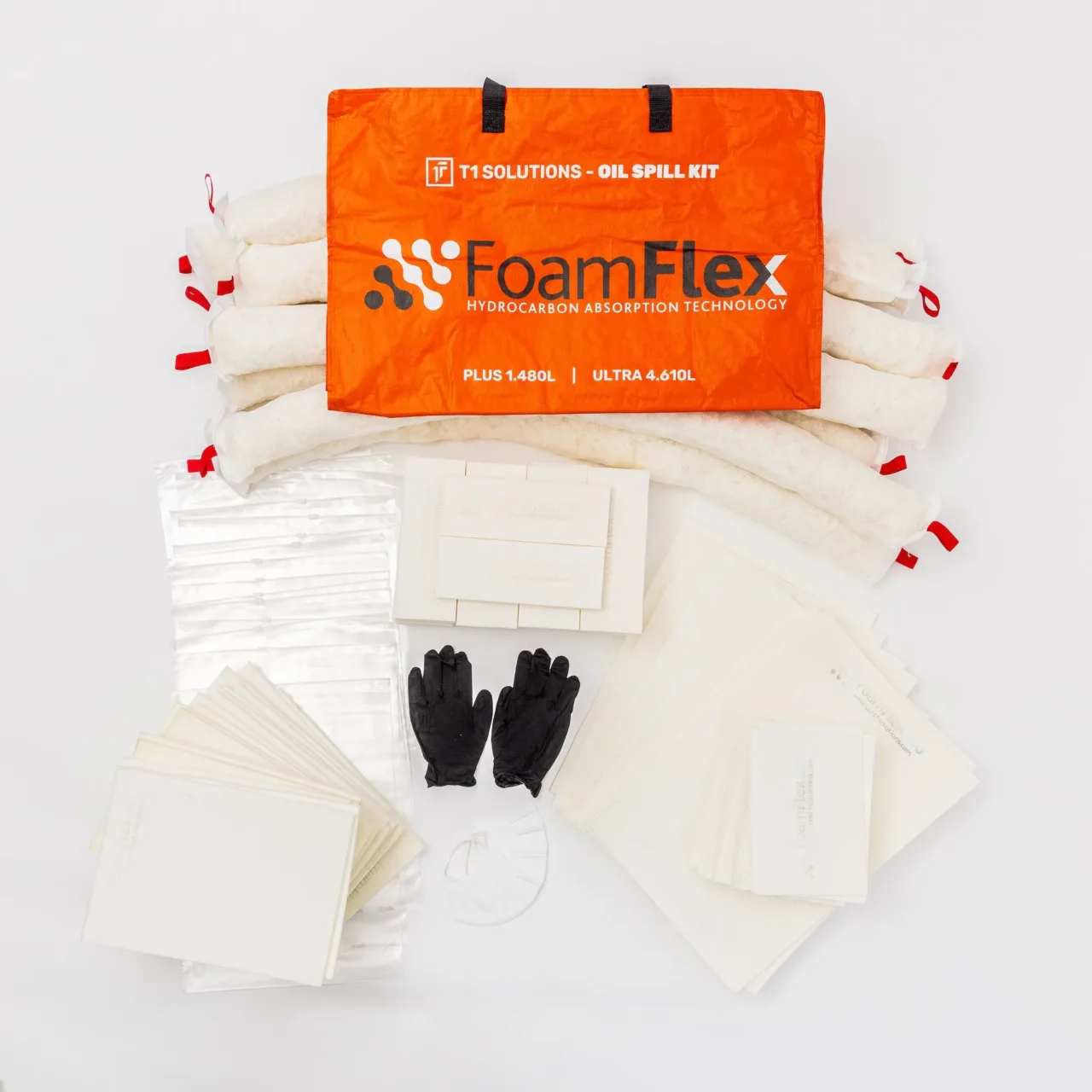
A notable innovation is Foam Flex, used in T1 oil spill solutions. Unlike many traditional oil diapers, Foam Flex is not just efficient but also reusable, making it an environmentally responsible choice. It can absorb large amounts of hydrocarbons within seconds and be reused multiple times without losing performance.
Pros:
Cons:
Natural organic sorbents are made from renewable resources, often plant- or animal-based. Common examples include peat moss, corn cobs, sawdust, coconut coir, wool waste, cotton fibers, and straw. People often turn to these materials when asking “what can I use to absorb oil” in household or farm situations, since they are widely available and inexpensive.
These sorbents work by physically soaking up hydrocarbons, but their major drawback is that they also absorb water. This makes them less practical for marine environments but useful in workshops, garages, or agricultural spills.
Pros:
Cons:
Natural inorganic sorbents are mineral-based, such as vermiculite, perlite, zeolites, and modified clays. These are granular materials often used to control oil spills on land, particularly in industrial facilities, workshops, or parking areas. When oil leaks onto concrete or soil, spreading these granules prevents further penetration and allows for easier cleanup.
These sorbents are cost-effective, but they do not discriminate between water and oil. Moreover, they generate heavy, bulky waste that must be managed carefully.
Pros:
Cons:
| Material | What it absorbs | Typical absorption | Best use |
|---|---|---|---|
| Polypropylene / synthetic foams (e.g. Foam Flex) | Hydrocarbons only (hydrophobic, oleophilic) | Up to 34 g/g (Foam Flex, T1 product data) | Water & land spills where reuse and selectivity matter – ports, offshore, industrial sites |
| Cotton, cellulose & natural fibres (peat moss, corn cobs, sawdust, coconut coir, wool waste, straw) | Oil and water (not selective) | — | Household, workshop, garage and agricultural spills |
| Loose granular sorbents (vermiculite, perlite, zeolites, modified clays) | Oil and water (not selective) | — | Industrial floors, workshops, parking areas; fire-resistant |
There is no one-size-fits-all answer to what soaks up oil best: it depends on the type and location of the spill. However, for large-scale or high-risk environments such as ports, offshore platforms, and transport hubs, synthetic sorbents offer the best balance of performance and practicality.
Foam Flex is especially effective. It is hydrophobic, selective, lightweight, and, unlike most sorbents, it can be reused multiple times. Compared to traditional oil diapers or single-use polypropylene pads, Foam Flex drastically reduces waste and lifecycle costs. This makes it a smart choice for companies seeking both operational reliability and sustainability.
Test1 has developed a full range of oil spill absorbents using Foam Flex, including:
By deploying the right mix of products, operators can respond quickly to emergencies, minimize oil spill effects on animals, and reduce the oil spill effects on oceans.
Oil spills – whether small leaks or famous oil spills like the Odyssey oil spill – remind us of the catastrophic damage hydrocarbons can cause. Knowing what causes oil spills and how to prevent oil spills is essential, but being prepared with effective sorbents makes the difference when accidents strike. From traditional granular sorbents to advanced oil skimmers and Foam Flex technology, the right choice depends on spill location, scale, and environmental risks.
Using effective secondary containment strategies alongside high-performance absorbents ensures quicker cleanup, reduced impact, and better long-term sustainability.
Synthetic sorbents such as polypropylene and Foam Flex are specifically engineered to repel water and absorb hydrocarbons only.
Most natural and inorganic sorbents are single-use. Synthetic options like Foam Flex, however, can be reused multiple times while maintaining absorption capacity.
For large-scale or offshore incidents, synthetic products such as booms, pads, and sorbents oil spill systems are the most effective, thanks to their capacity and selectivity.
National Oceanic and Atmospheric Administration (NOAA). Oil Spill Response and Restoration – NOAA OR&R
International Maritime Organization (IMO). MARPOL Convention – IMO.org
U.S. Environmental Protection Agency (EPA). Oil Spill Prevention and Preparedness Regulations. EPA.gov
European Maritime Safety Agency (EMSA). Oil Spill Response Services. EMSA.europa.eu
International Tanker Owners Pollution Federation (ITOPF). Technical Information Papers on Oil Spills – ITOPF.org
When oil spills occur, fast, sustainable action is critical. T1 Solutions offers advanced, eco-conscious oil spill solutions designed for real-world impact. Whether you’re cleaning oil spills in the ocean or on land, our reusable absorbent technology offers both environmental and economic advantages, making cleanup efficient and responsible.
You need to load content from reCAPTCHA to submit the form. Please note that doing so will share data with third-party providers.
More InformationYou are currently viewing a placeholder content from Turnstile. To access the actual content, click the button below. Please note that doing so will share data with third-party providers.
More InformationYou are currently viewing a placeholder content from Vimeo. To access the actual content, click the button below. Please note that doing so will share data with third-party providers.
More InformationYou are currently viewing a placeholder content from YouTube. To access the actual content, click the button below. Please note that doing so will share data with third-party providers.
More InformationYou need to load content from reCAPTCHA to submit the form. Please note that doing so will share data with third-party providers.
More InformationYou are currently viewing a placeholder content from reCAPTCHA. To access the actual content, click the button below. Please note that doing so will share data with third-party providers.
More Information