Case study · Spill response

Piossasco: oil spill barrier on a watercourse at a power plant

A hydrocarbon spill from a power plant at Piossasco, near Turin, reached a watercourse. A single T1 barrier line with FoamFlex contained the thin surface contamination, including iridescent sheen, after several lines of conventional barriers had given limited or no result.
Spill response
Case type
Watercourse
Site
Thin films and sheens
Pollutant
Single barrier line
Equipment
.Challenge

Why is a thin film hard to hold?

At the Piossasco power plant, a hydrocarbon spill reached a watercourse. There was no free product, only very thin surface films, iridescent sheens and discontinuous hydrocarbon patches, which conventional barriers hold poorly. The goal was to contain the thin contamination and remove it progressively.

The event in numbers
25-30
Days of installation
T1 barrier line across the watercourse
0
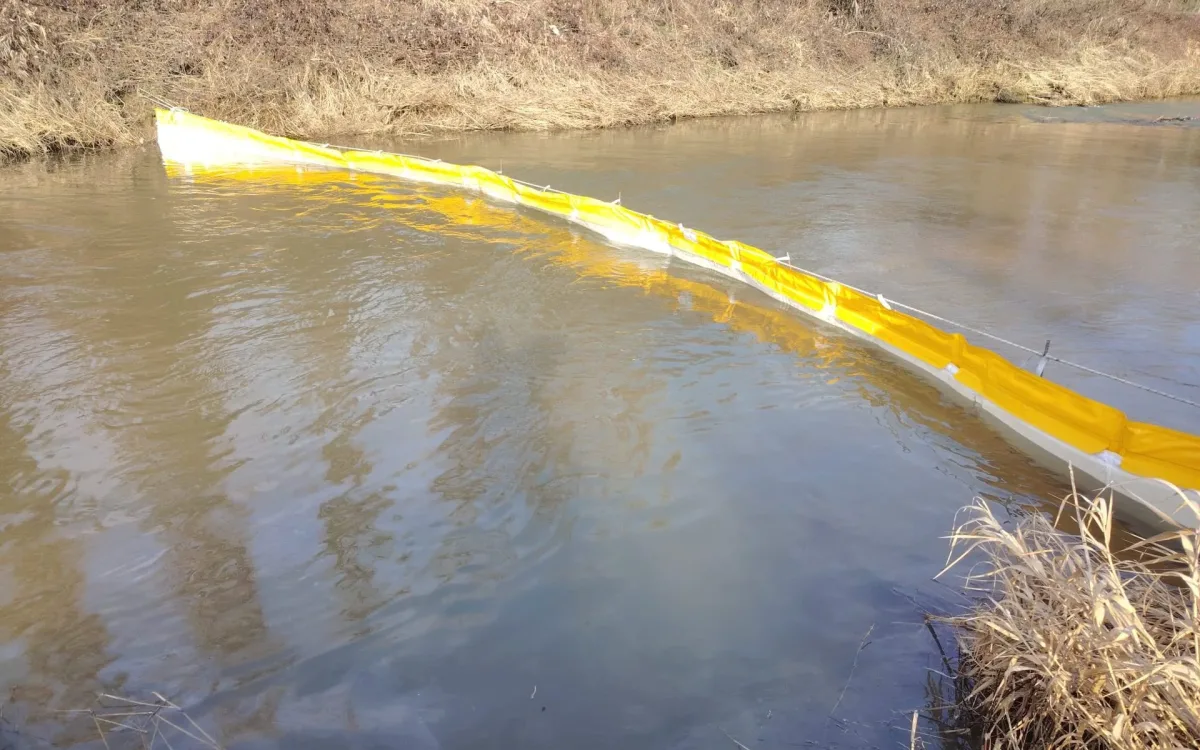
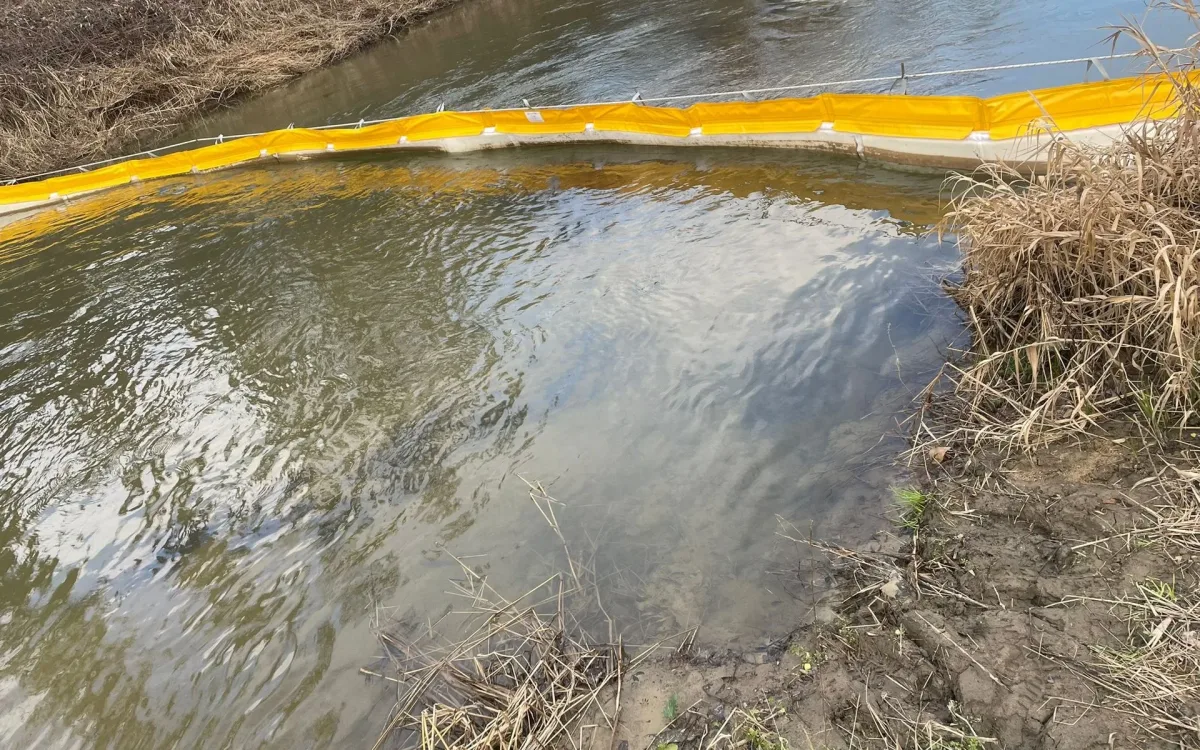
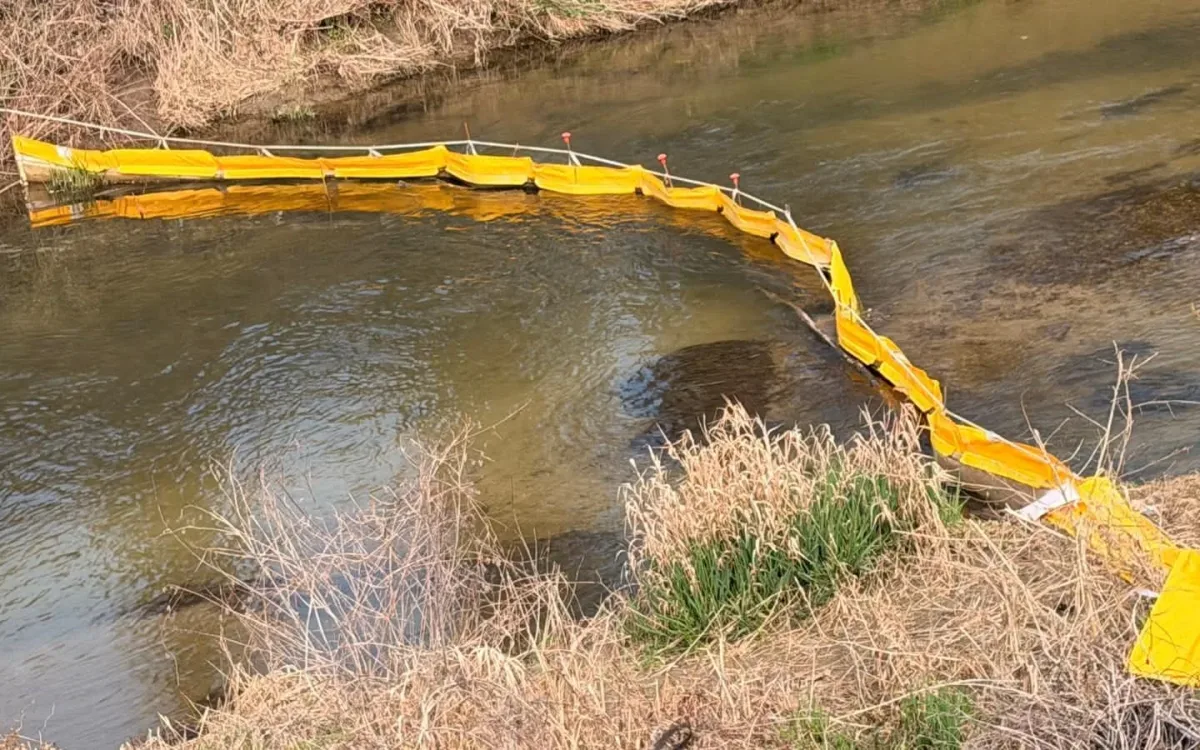
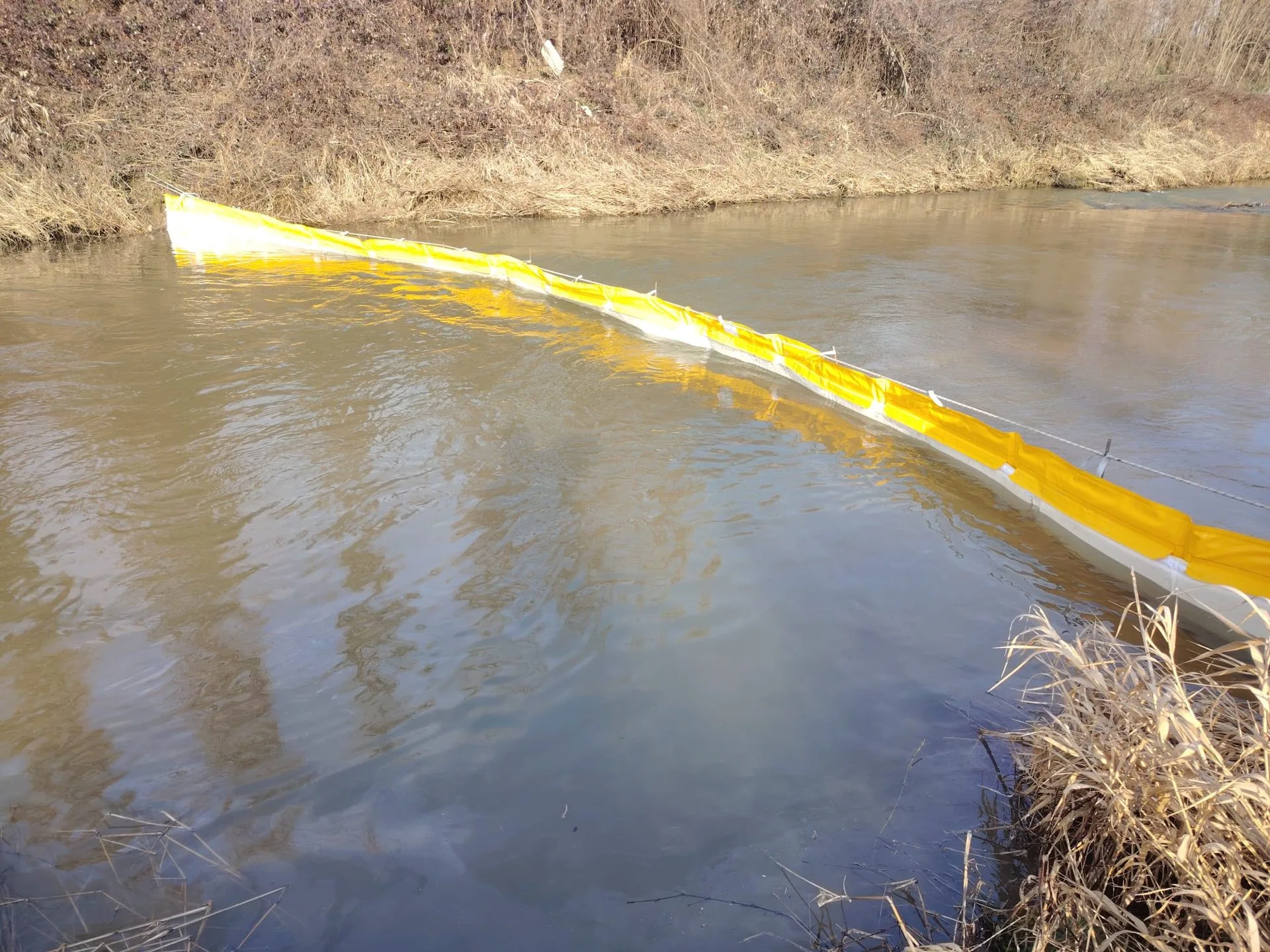
Yellow T1 barrier line floating diagonally across a watercourse to intercept surface hydrocarbons
1
Start of the barrier line
2
Barrier floating on the water surface
3
End of the barrier at the bank
Field note · Reading the photo

A single yellow barrier line crosses the watercourse (1 to 3) and holds the thin film on the water surface.

Field note · Reading the photo

A single yellow barrier line crosses the watercourse (1 to 3) and holds the thin film on the water surface.

.Intervention

How was the barrier installed?

One T1 barrier line with FoamFlex stayed in place for the whole installation period, with no frequent wringing or replacement.

1

Assess the site

The contamination was thin films and sheens with no free product. Several lines of conventional barriers had already been used with limited or no result.

2

Install and anchor the barrier

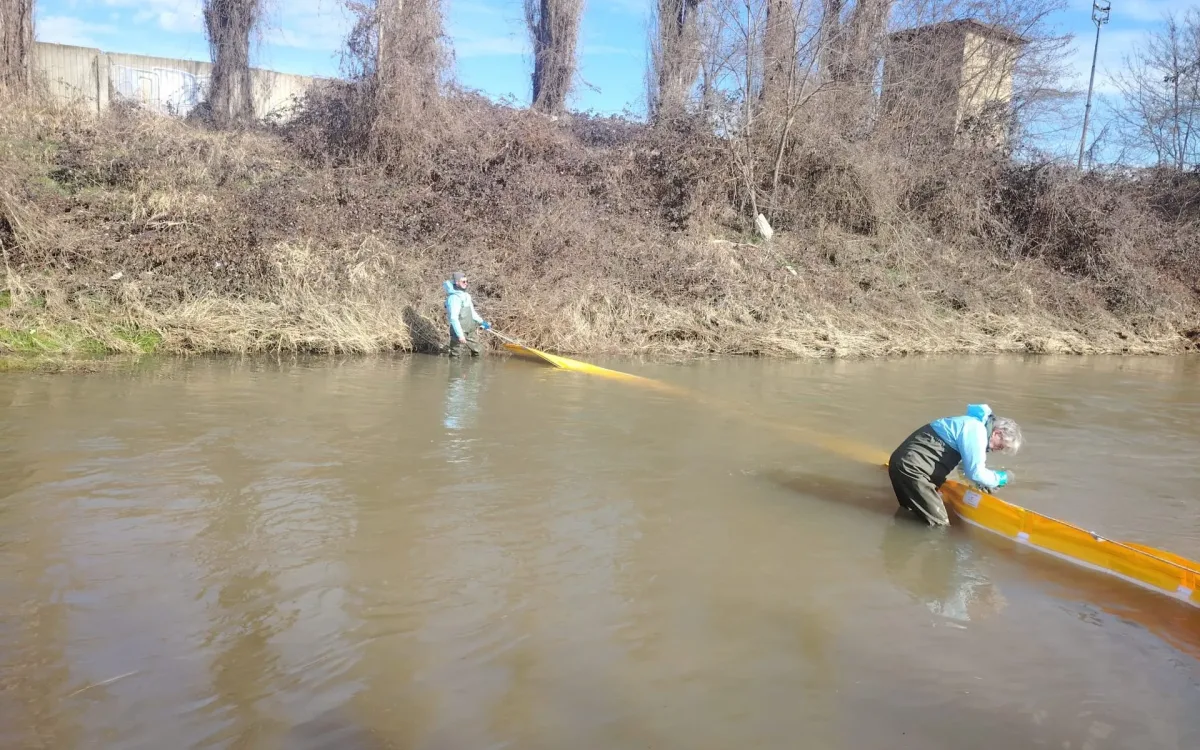
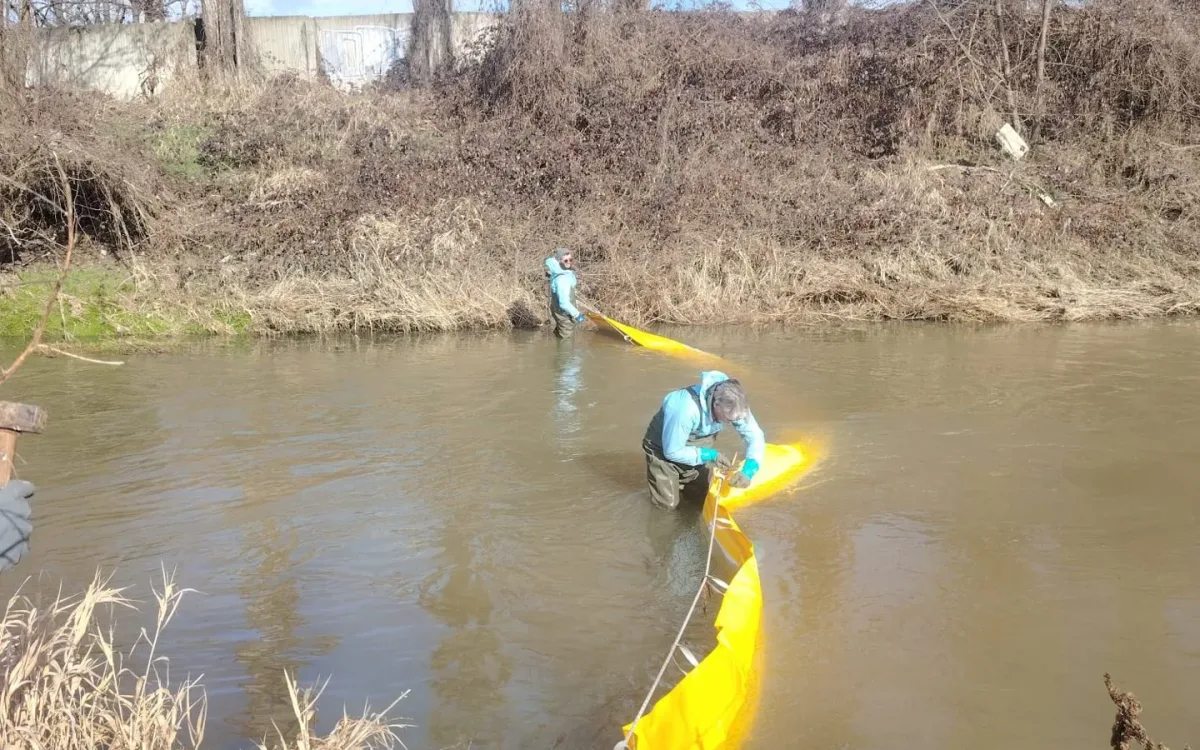
Operators installed a single T1 TF1 / FF barrier line with FoamFlex reusable oil-absorbent mat across the watercourse, held by an anchoring and positioning system.

3

Keep it in place and monitor

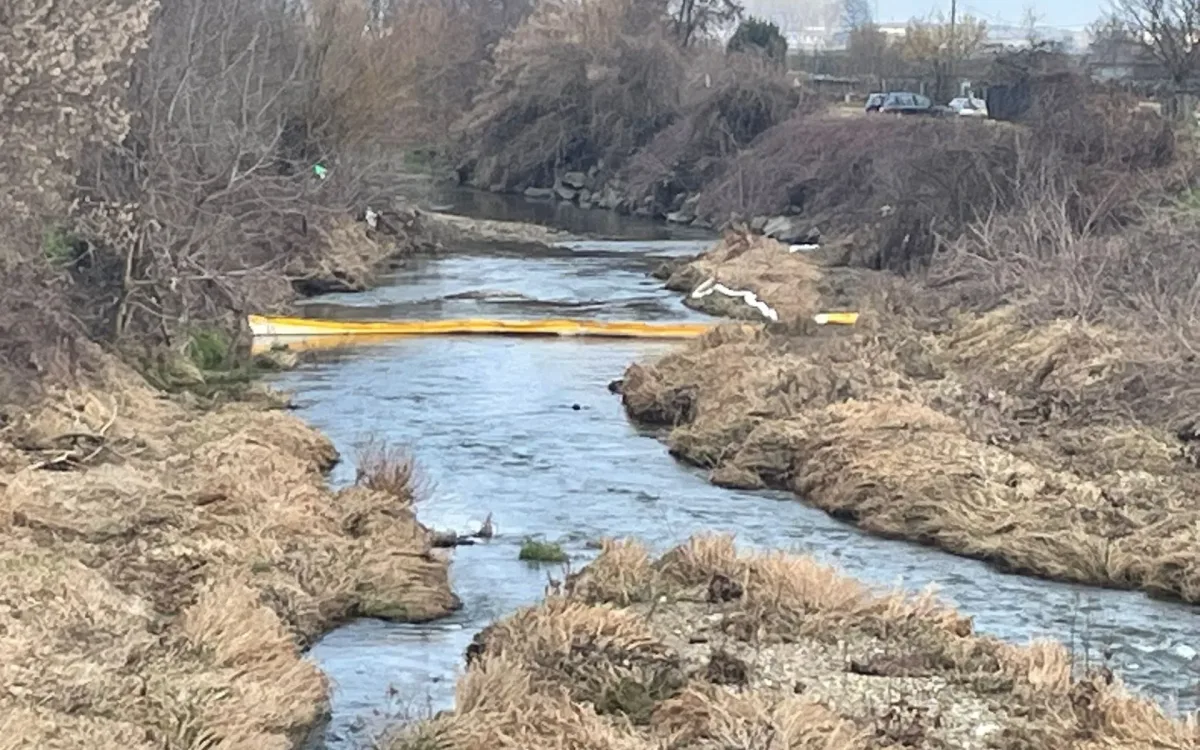
The barrier stayed in place for the whole installation period of 25-30 days. It contained and intercepted the oil and allowed monitoring, with no frequent wringing or replacement.

.Results

What were the results?

Effective on thin films

Effective on very thin surface films, iridescent sheens and discontinuous hydrocarbon patches.

Reliable for the whole period

Reliable performance over the full 25-30 day exposure, with no frequent wringing or replacement.

Less maintenance and waste

Less maintenance and better operating efficiency. Fewer single-use absorbents used and less waste produced. An oil spill response contractor that worked with these materials in the field reported the results.

.Products used

Which products were used?

Products used in this intervention: Carpet with Boom coupling, Vertical Barrier – Modular FoamFlex Barrier system, Manual Wringer FF, FoamFlex Carpet 2.0, Absorbent Sock SLS20, single-use PP 300 x 20 cm.

Reusable

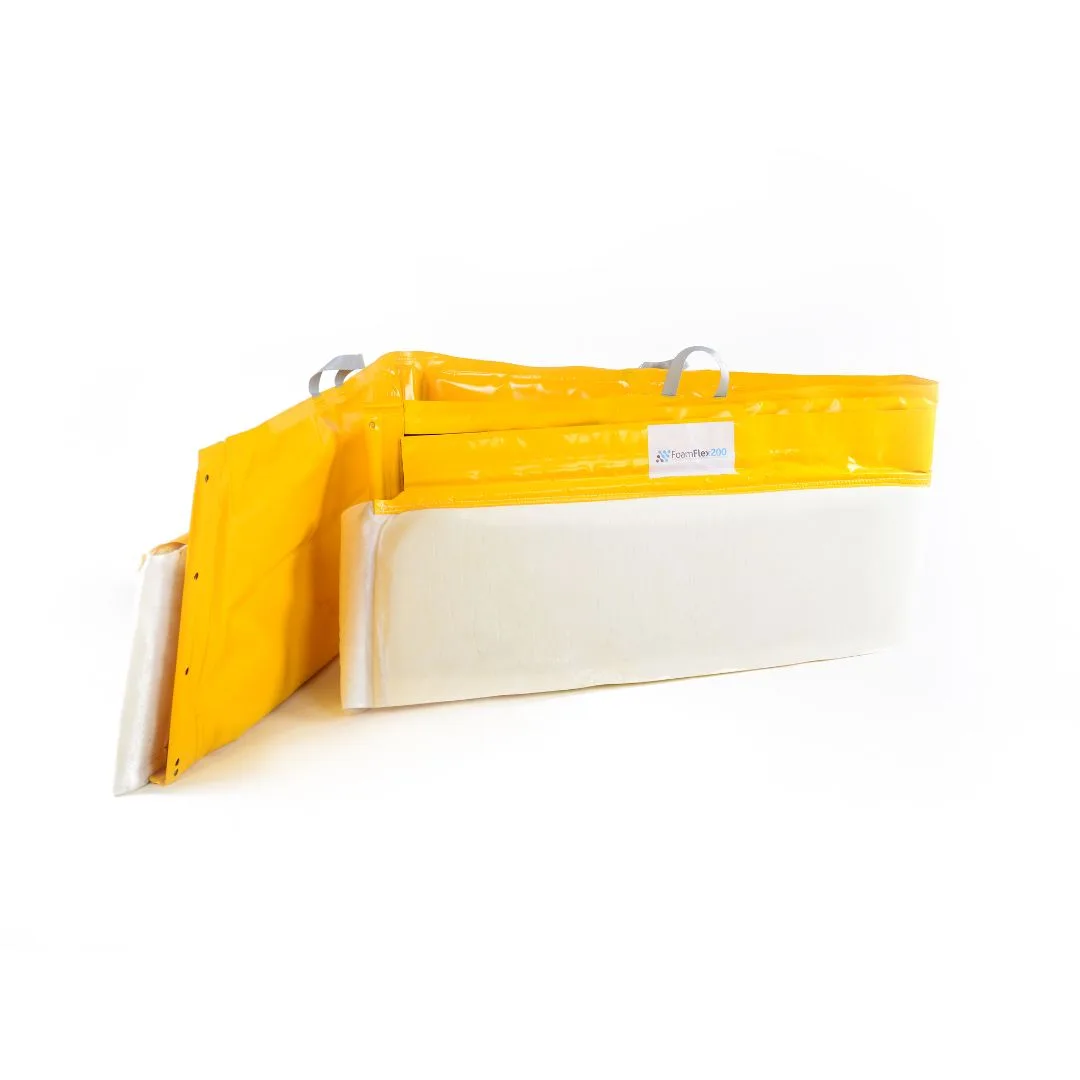
Modular vertical barrier system with FoamFlex hook-on: effectively absorbs and contains oils and hydrocarbons, even in wave or turbulence conditions.

Price on request

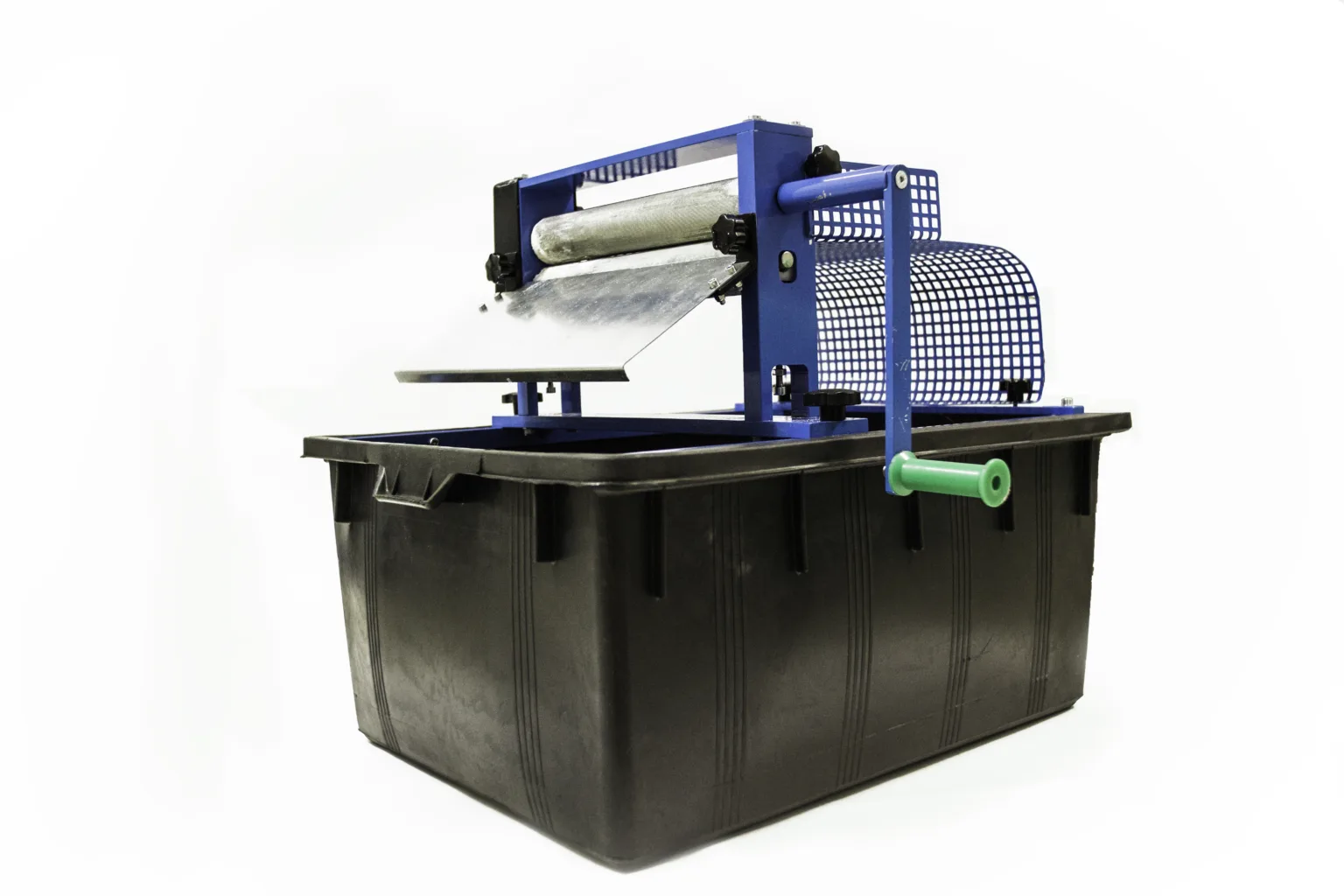
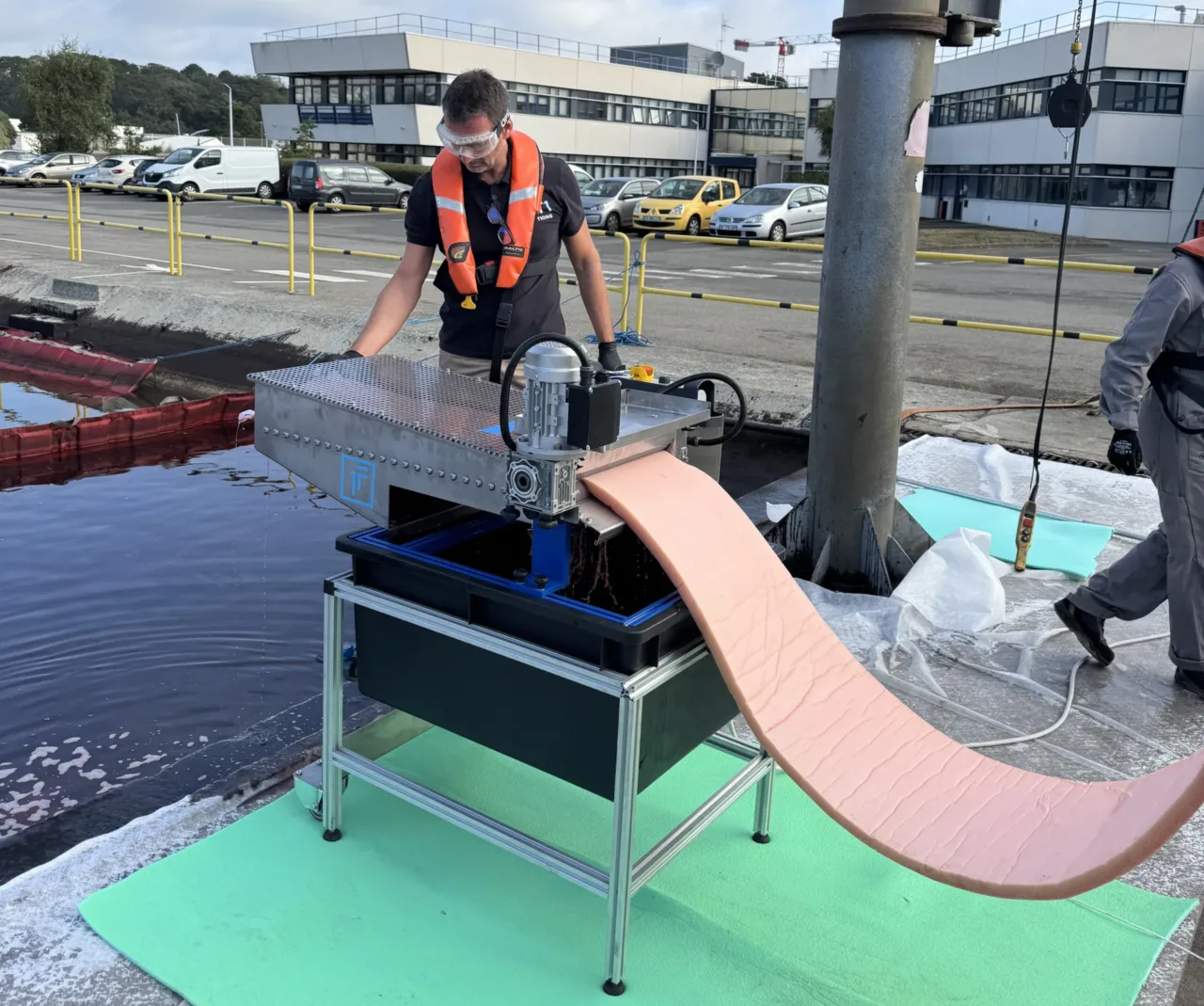
Manual wringer for FoamFlex: fast reuse, no electricity needed, efficient oil recovery.

2.440,00 €incl. VAT
See how it works
Reusable

Absorbent mat with velcro on the long side to hook it onto the boom, velcro on both short sides to…

280,60 €incl. VAT
See how it works
Reusable

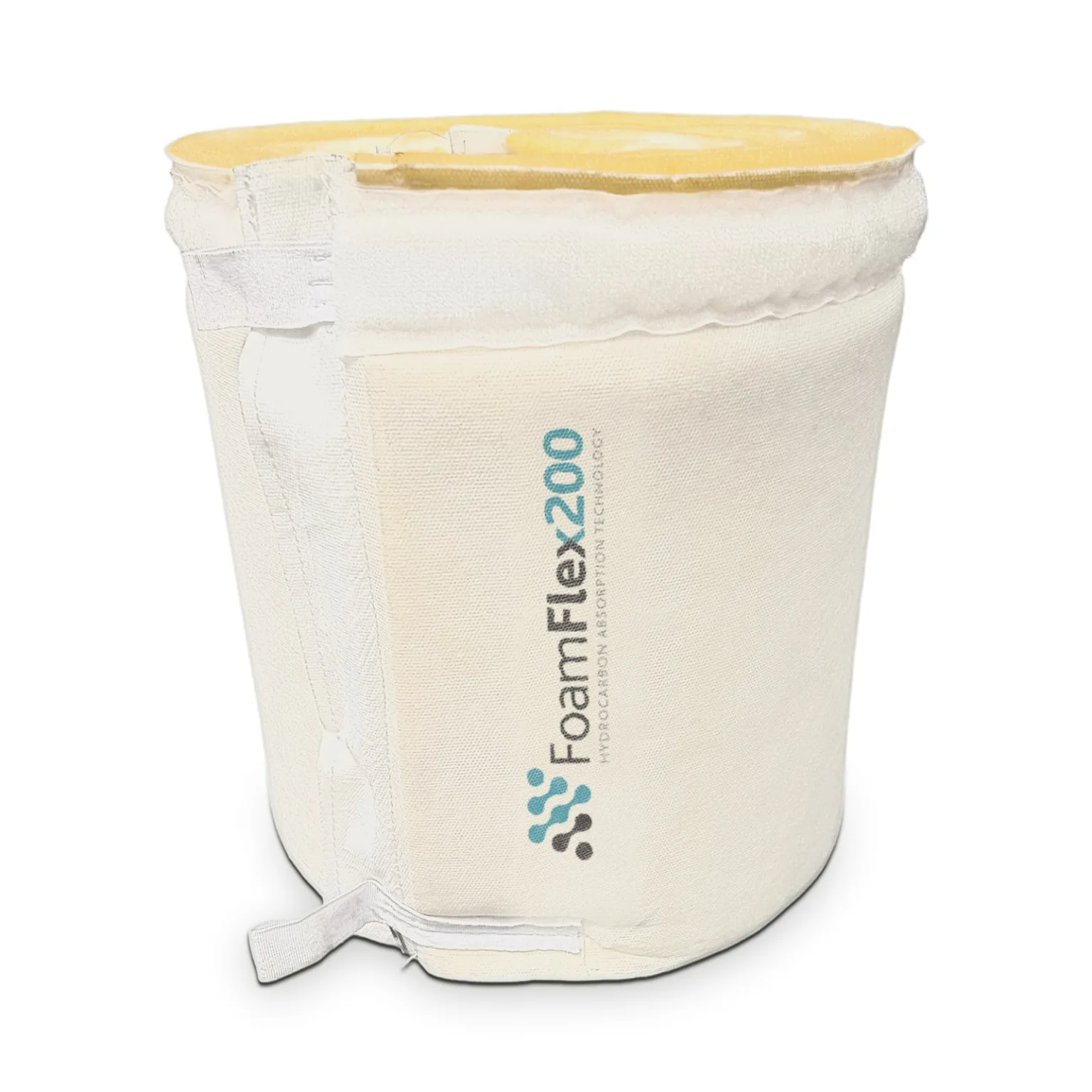
Reusable absorbent carpet with velcro and handles, ideal for all types of spills and compatible with FF-WRING.

Price range: 156,16 € through 268,40 €incl. VAT
.FAQ

Frequently asked questions

In this case, yes. A single T1 TF1 / FF barrier line with FoamFlex contained and intercepted thin films, iridescent sheens and discontinuous patches that several lines of conventional barriers had not controlled.

25-30 days. It performed reliably over the whole period, with no frequent wringing or replacement.

FoamFlex is reusable, so the installation uses fewer single-use absorbents and produces less waste. It also needs less maintenance.

.Related cases

More case studies

Cedre | International tests on reusable absorbents for oil spill response

In 2025, FoamFlex technology was subjected to a series of technical evaluations at Cedre, France’s leading center for the prevention and management of accidental water pollution. The program was designed to assess the potential of reusable absorbents for oil spill response, evaluating their performance under controlled conditions that closely replicate real-world operational scenarios. The initiative brought together leading institutional and technical stakeholders with the objective of identifying innovative solutions capable of improving the effectiveness of hydrocarbon spill response operations.
Read the case study →
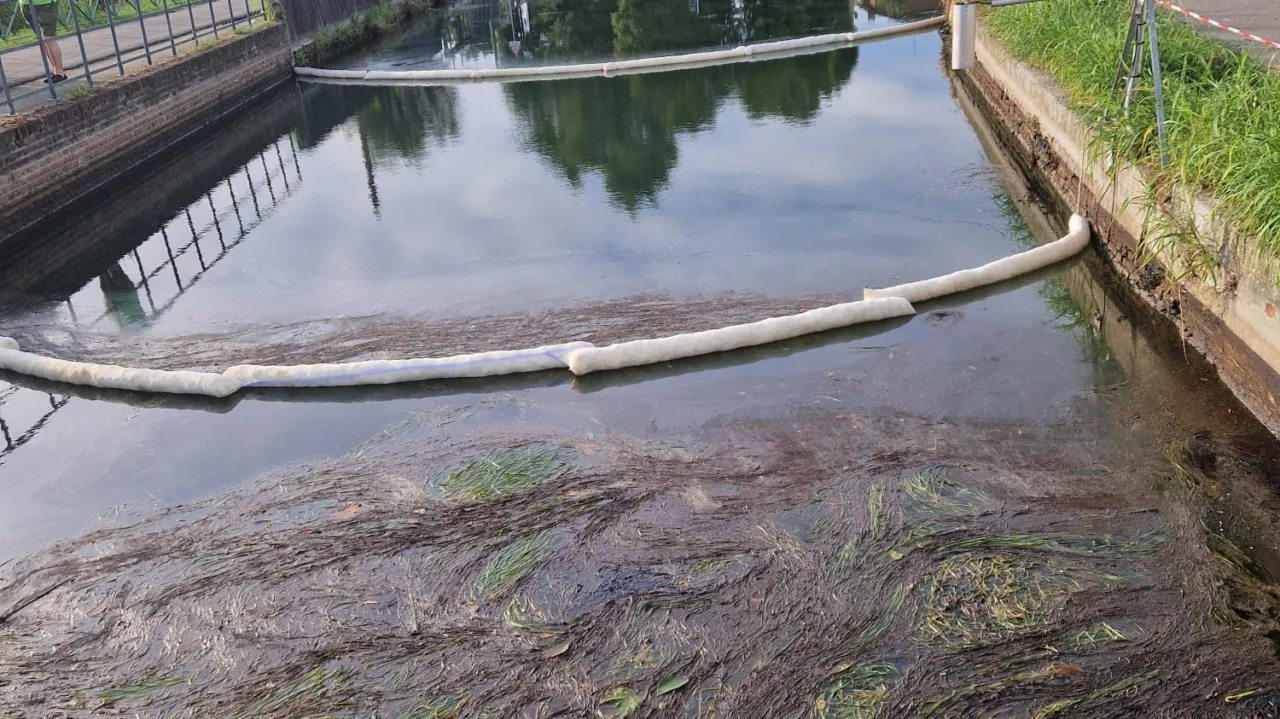
Two white absorbent lines stretched across a canal with a dark oil film and floating vegetation upstream

Canal oil spill at Abbiategrasso: FoamFlex absorbent lines on the Naviglio Grande

At Abbiategrasso, in the Milan area, a hydrocarbon spill hit the Naviglio Grande and Naviglio di Bereguardo canal system. Weathered oil had piled up at the lowered sluice gates and an iridescent sheen was spreading along the canal. T1 Solutions laid FoamFlex absorbent lines across the canal to intercept the sheen, while targeted manual and mechanical removal dealt with the solidified residues.
Read the case study →
Aerial view of an oil sheen drifting on a river channel through mangroves in the Niger Delta, Nigeria

Brass Canal, Nigeria: FoamFlex200 field test on light crude in a drainage canal

At the Brass Canal site on Brass Island, Bayelsa, Nigeria, T1 Solutions ran a field validation of FoamFlex200 on Nigerian Brass Light Crude. Four FF200 standard carpets and one half carpet retained 45.84 L of hydrocarbons and 0 L of water. The test confirmed the product for operational use in a canal and drainage area.
Read the case study →

Talk to us about your own spill response

A T1 Solutions specialist helps you choose the right products for your site.