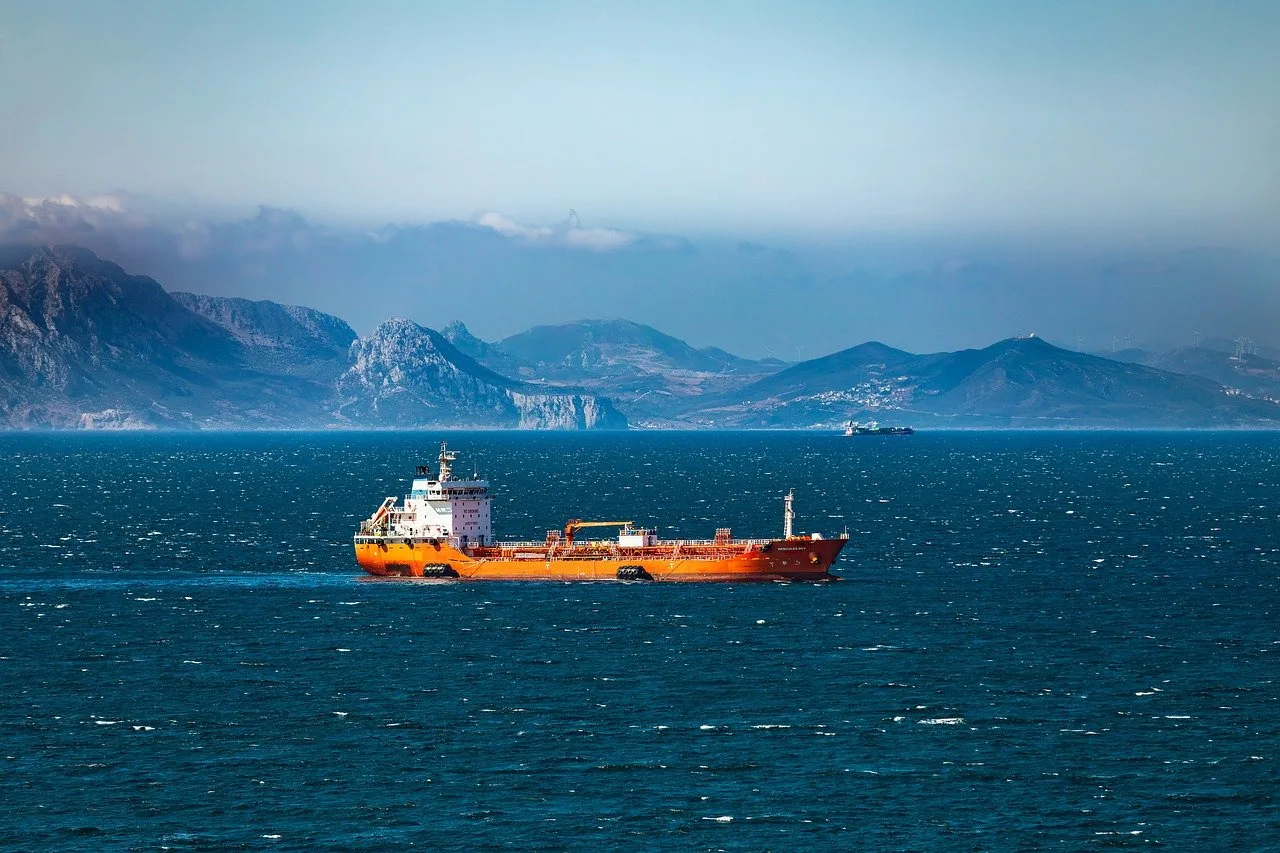
Oil spills are among the most devastating environmental disasters, causing long-term damage to marine ecosystems, wildlife, and coastal communities. Over the past century, several famous oil spills have left lasting scars on our oceans, some ranking as the largest oil spill in history, others notable for their ecological or human toll.
In this article, we present a list of oil spills that stand out as the worst oil spills in recorded history. Each section includes the cause, type of oil, spill size, containment efforts, environmental impact, and why it ranks among the most famous oil spills ever documented. These events show also the importance of using proper oil spill solutions to minimize damage.
Volume spilled: ~1 million barrels of condensate
The Sanchi disaster involved a collision between an Iranian tanker carrying natural gas condensate and a cargo ship. The condensate burned for over a week before the vessel sank, releasing its cargo into the East China Sea. Although smaller in volume than other major oil spills, the highly toxic nature of condensate made this incident particularly dangerous to marine life.
Rapid evaporation reduced surface slicks, but toxic compounds dissolved into the water column, harming fish, plankton, and other species. Modern oil absorbent mats and oil absorbent pads are crucial tools in mitigating such spills, helping to contain and clean up oil more effectively. The Sanchi spill is a modern reminder that the worst oil spills are not always the largest by volume—chemical composition and location are equally critical factors in environmental impact.
Volume spilled: ~80 million gallons
The Nowruz Field spill occurred during the Iran-Iraq War when an offshore oil platform was damaged by a tanker collision and later targeted by airstrikes. Wartime conditions prevented timely repairs, allowing crude oil to leak into the Persian Gulf for over seven months.
This disaster, considered one of the largest oil spills in history, killed thousands of seabirds and marine mammals while contaminating coral reefs and fishing grounds. Cleanup crews faced extreme danger from ongoing hostilities, making this one of the most challenging oil spill disasters ever managed. It further highlights the severe oil spill effects on oceans.
Volume spilled: ~35 million gallons
The Sea Star oil spill began when the South Korean tanker collided with a Brazilian vessel in the Gulf of Oman. Fires broke out, and the damaged tanker leaked millions of gallons of crude before sinking. Despite occurring offshore, the spill caused substantial harm to regional fisheries and seabird populations.
The disaster is remembered among famous oil spills for its combination of collision, fire, and massive oil loss, illustrating the dangers of congested shipping lanes. Cleanup operations were limited by the remote location and prevailing currents, which dispersed the oil over a vast area. The incident reveals the ongoing importance of sorbent socks in oil spill response.
Volume spilled: ~45 million gallons
The MT Haven, a Cypriot-flagged tanker, exploded off the coast of Genoa while unloading crude oil. Fires burned for three days before the vessel sank, leaking oil for months afterward. This spill, one of the worst oil spills in the Mediterranean, contaminated miles of coastline and decimated local fishing and tourism industries.
Cleanup efforts involved skimming, booms, and manual shoreline cleaning, but persistent leaks from the sunken wreck prolonged environmental damage. The MT Haven disaster underscored the vulnerability of semi-enclosed seas, where water exchange is limited and oil can remain trapped, intensifying ecological harm. In this context, oil spill mops could have played an important role in shoreline cleanup efforts.
Volume spilled: ~84 million gallons
Caused by a pipeline rupture, the Kolva River spill is one of the largest oil spills in history to occur in a freshwater system. For eight months, crude oil leaked into the Kolva River, contaminating tributaries and wetlands before cleanup began. Harsh Arctic conditions delayed containment, allowing oil to seep into frozen ground and groundwater. The disaster destroyed fish habitats, polluted drinking water sources, and damaged local reindeer herding economies.
While less publicized than marine spills, the Kolva River incident shows that major oil spills can be equally devastating in inland environments. Long-term monitoring revealed that oil residues persisted in sediments for years, continuing to harm wildlife. This spill highlights challenges related to where oil spills happen, including freshwater and remote areas.
Volume spilled: ~69 million gallons
The Amoco Cadiz disaster occurred when the supertanker ran aground during a storm off the coast of Brittany, France, spilling its entire cargo of light crude oil and bunker fuel. The slick devastated over 200 miles of coastline, killing millions of mollusks, crustaceans, and fish, and wiping out local oyster farms. Thousands of seabirds perished, and the region’s fishing industry took years to recover.
This incident, considered one of the worst oil spills in history, led to legal battles between the French government and the ship’s owner. It also spurred international changes in tanker design and routing. The Amoco Cadiz remains a key case study in how oil spill disasters can cripple coastal economies and ecosystems for decades, illustrating the lasting effects of oil spills on marine environments.
Volume spilled: ~79 million gallons
The Castillo de Bellver, a Spanish tanker carrying light crude oil, caught fire and drifted before breaking apart off the coast of South Africa. Most of the oil burned, but around 50 million gallons spilled into the Atlantic. The slick spread widely, killing seabirds and contaminating marine habitats. Currents carried much of the oil away from the coast, reducing direct shoreline damage but still causing long-term harm to pelagic ecosystems.
This event ranks among the most famous oil spills because it combined fire, explosion, and massive oil loss—demonstrating the multiple hazards involved in oil transport. South African authorities faced significant challenges coordinating an offshore response, emphasizing the importance of preparedness in tanker-heavy shipping lanes. The disaster showed how booms for oil spills can be vital for containment even when fire complicates response efforts.
Volume spilled: ~43 million gallons
When the Liberian tanker Odyssey broke apart during a severe storm about 700 miles off Nova Scotia, it released millions of gallons of crude oil into the North Atlantic. High winds and rough seas made containment impossible, and the spill—ranked among the worst oil spills from a tanker—was quickly dispersed by the storm.
While this limited shoreline impact, the event caused significant harm to open-ocean species, including seabirds and fish. The Odyssey spill highlights a recurring problem with major oil spills at sea: even when oil does not reach coastlines, it can still devastate marine ecosystems. The disaster also exposed the difficulty of mounting an emergency response in extreme weather far from port facilities. The Odyssey oil spill remains a case study in maritime spill response.
Volume spilled: ~80 million gallons
The ABT Summer, a Liberian-flagged tanker carrying Iranian crude, exploded and caught fire approximately 900 miles off the coast of Angola. The disaster, classified among the largest oil spills in history, saw burning oil slicks stretching over 80 square miles. The crew abandoned ship before the vessel eventually sank in deep water, leaking crude for days.
Because the spill occurred far offshore, coastal contamination was limited, but marine life in the open ocean suffered heavy losses. The lack of immediate cleanup response—due to the remote location—meant the slick dispersed widely, harming fish stocks and seabirds. This incident remains a key example of the challenges in responding to oil spill disasters far from land-based resources, emphasizing the need for oil spill kits aboard ships.
Volume spilled: ~87 million gallons
One of the worst oil spills on land occurred in Uzbekistan’s Fergana Valley when a blowout at the Mingbulak oil field ignited, creating massive fires that burned for more than two months. The crude oil flowed into a containment basin, but high volumes still seeped into surrounding soil and waterways.
Containment efforts were hampered by freezing temperatures and the risk of further explosions. Although far from an ocean, this disaster caused widespread environmental damage, contaminating rivers and farmlands, killing livestock, and disrupting agricultural production.
Volume spilled: ~11 million gallons
Among the worst oil spills in U.S. history, the Exxon Valdez disaster occurred when the tanker ran aground on Bligh Reef, releasing millions of gallons of crude oil into pristine Alaskan waters. Harsh weather and remote location hindered containment, and the slick eventually covered 1,300 miles of coastline.
The spill killed an estimated 250,000 seabirds, 2,800 sea otters, 300 harbor seals, and billions of salmon and herring eggs. Cleanup involved manual removal, high-pressure washing, skimming, and dispersants, yet oil residues persisted for decades.
This incident became a turning point in U.S. maritime law, leading to the Oil Pollution Act of 1990, and remains one of the most famous oil spills for its profound ecological, economic, and legal impacts. It also brought global awareness to oil spill effects on animals and the fragile Arctic ecosystem.
Volume spilled: ~90 million gallons
The collision between two fully loaded supertankers—the Atlantic Empress and the Aegean Captain—during a tropical storm caused the largest ship-related oil spill in history. Fires broke out on both vessels, complicating containment and cleanup efforts. The Atlantic Empress continued burning and leaking oil for two weeks before sinking in deep water.
The spill occurred offshore, which reduced immediate coastal contamination but still caused significant harm to open-ocean marine life. Strong currents dispersed the crude oil widely, impacting fish, seabirds, and other pelagic species.
The disaster is often cited among the major oil spills for its sheer volume, high visibility, and the logistical challenges of responding to accidents involving burning tankers at sea. It remains a reminder of the risks posed by maritime oil transport in severe weather conditions. This spill underscored the need for effective oil skimmers to recover oil on open water.
Volume spilled: ~140 million gallons
The Ixtoc I spill occurred when a blowout at a PEMEX exploratory oil well off the coast of Campeche, Mexico, caused uncontrolled crude oil discharge for nearly nine months. The disaster is ranked among the worst oil spills globally and in the Gulf of Mexico. Efforts to cap the well were repeatedly hindered by equipment failure and strong currents, which spread the slick across Mexican and U.S. coastlines.
Containment methods included booms, skimming, and the use of dispersants, though large amounts of oil still reached beaches in Texas. Environmental damage was extensive, killing marine birds, sea turtles, and damaging shrimp and fish populations critical to the region’s economy.
Its prolonged duration makes Ixtoc I one of the largest oil spills in history and a case study in the challenges of deepwater blowout response. Innovative oil spill absorbent materials were tested in this and subsequent incidents.
Volume spilled: ~210 million gallons
Often listed among the most famous oil spills, the Deepwater Horizon disaster began with an explosion on BP’s offshore drilling rig, killing 11 workers and causing an uncontrolled blowout. Crude oil gushed from the wellhead nearly a mile below the ocean’s surface for 87 days. At its peak, the slick covered thousands of square miles in the Gulf of Mexico, impacting beaches, wetlands, and estuaries.
Containment efforts involved capping the well, skimming, controlled burns, and dispersant use. Marine life suffered greatly—over 100,000 seabirds, thousands of sea turtles, and countless fish perished. Economic impacts on Gulf fisheries and tourism were severe.
The event is considered the worst oil spill in U.S. history due to its scale, long-term damage, and role in shaping future offshore drilling regulations. This disaster highlights the importance of how to prevent oil spills in offshore drilling.
Volume spilled: ~240–336 million gallons
The worst oil spill in history occurred during the Gulf War when Iraqi forces deliberately released vast quantities of oil into the Persian Gulf to prevent a U.S.-led amphibious assault. This spill involved crude oil from tankers and terminals, creating a slick over 4,000 square miles.
Containment was nearly impossible due to the ongoing conflict, and the spill smothered coastal habitats, killing thousands of seabirds, fish, and marine mammals. Its political and environmental consequences make it one of the largest oil spills in history and a symbol of the devastation caused by wartime environmental sabotage. This incident emphasizes the need for secondary containment strategies to limit oil spread during emergencies.
Innovations like FoamFlex, developed by Test 1 Solutions, are revolutionizing oil spill solutions. FoamFlex is a patented polymer foam designed to absorb up to 34 times its own weight in hydrocarbons, while effectively repelling over 95% of water, enabling oil recovery without water contamination. Remarkably efficient, one unit can be wrung out and reused over 200 times, significantly reducing operational waste and cost compared to one-time-use sorbents. This makes it a truly reusable solution suitable for a wide range of scenarios – from daily industrial leaks to large-scale marine disasters. FoamFlex’s rapid absorption and reusability deliver fast intervention, reduced cleanup volumes, and minimized environmental impact.
The Deepwater Horizon disaster is the largest oil spill in U.S. waters, releasing about 210 million gallons. It contaminated over 1,300 miles of shoreline and killed hundreds of thousands of marine animals. Long-term monitoring shows lingering oil in deep-sea sediments more than a decade later, affecting fisheries and habitats.
The Nowruz Field spill was heavily influenced by wartime damage and environmental factors. Military attacks during the Iran-Iraq War damaged the platform, and rough seas hindered containment. The release continued for months, with oil spreading across sensitive Persian Gulf ecosystems.
The Exxon Valdez and Deepwater Horizon are prime examples, with human errors playing a critical role. Poor decision-making, safety lapses, and inadequate emergency planning contributed to both disasters. These events prompted major policy reforms and stricter environmental regulations worldwide.
The Ixtoc I spill lasted about nine months before the well was capped. Multiple failed attempts to stop the leak prolonged the disaster, releasing an estimated 140 million gallons into the Gulf of Mexico. This case remains a reference point for improving blowout prevention and deepwater drilling safety.
NOAA Office of Response and Restoration – Largest Oil Spills Affecting U.S. Waters
Encyclopaedia Britannica – 9 Biggest Oil Spills in History
Treehugger – The Largest Oil Spills in History
Wikipedia – List of Oil Spills
Oceana – Top 5 Worst Oil Spills in History
When oil spills occur, fast action is critical. Test 1 Solutions offers FoamFlex reusable absorbents for oil spill response. Whether you’re cleaning oil spills in the ocean or on land, FoamFlex absorbs up to 34 times its weight and can be wrung out and reused up to 200 times.
You need to load content from reCAPTCHA to submit the form. Please note that doing so will share data with third-party providers.
More InformationYou are currently viewing a placeholder content from Turnstile. To access the actual content, click the button below. Please note that doing so will share data with third-party providers.
More InformationYou are currently viewing a placeholder content from Vimeo. To access the actual content, click the button below. Please note that doing so will share data with third-party providers.
More InformationYou are currently viewing a placeholder content from YouTube. To access the actual content, click the button below. Please note that doing so will share data with third-party providers.
More InformationYou need to load content from reCAPTCHA to submit the form. Please note that doing so will share data with third-party providers.
More InformationYou are currently viewing a placeholder content from reCAPTCHA. To access the actual content, click the button below. Please note that doing so will share data with third-party providers.
More Information