Case study · Technical evaluation

Cedre | International tests on reusable absorbents for oil spill response

In 2025, FoamFlex technology was subjected to a series of technical evaluations at Cedre, France’s leading center for the prevention and management of accidental water pollution. The program was designed to assess the potential of reusable absorbents for oil spill response, evaluating their performance under controlled conditions that closely replicate real-world operational scenarios. The initiative brought together leading institutional and technical stakeholders with the objective of identifying innovative solutions capable of improving the effectiveness of hydrocarbon spill response operations.
Technical evaluation
Case type
Cedre
Site
Reusable absorbents
Scenario
Hydrocarbons
Pollutant
Sector
.Challenge

What did the Cedre tests measure?

The tests conducted at Cedre extended beyond simple absorption capacity measurements and focused on a range of critical operational parameters. These included ease of deployment, buoyancy, mechanical resistance, material durability during use, and the ability to separate absorbed hydrocarbons from the absorbent media.

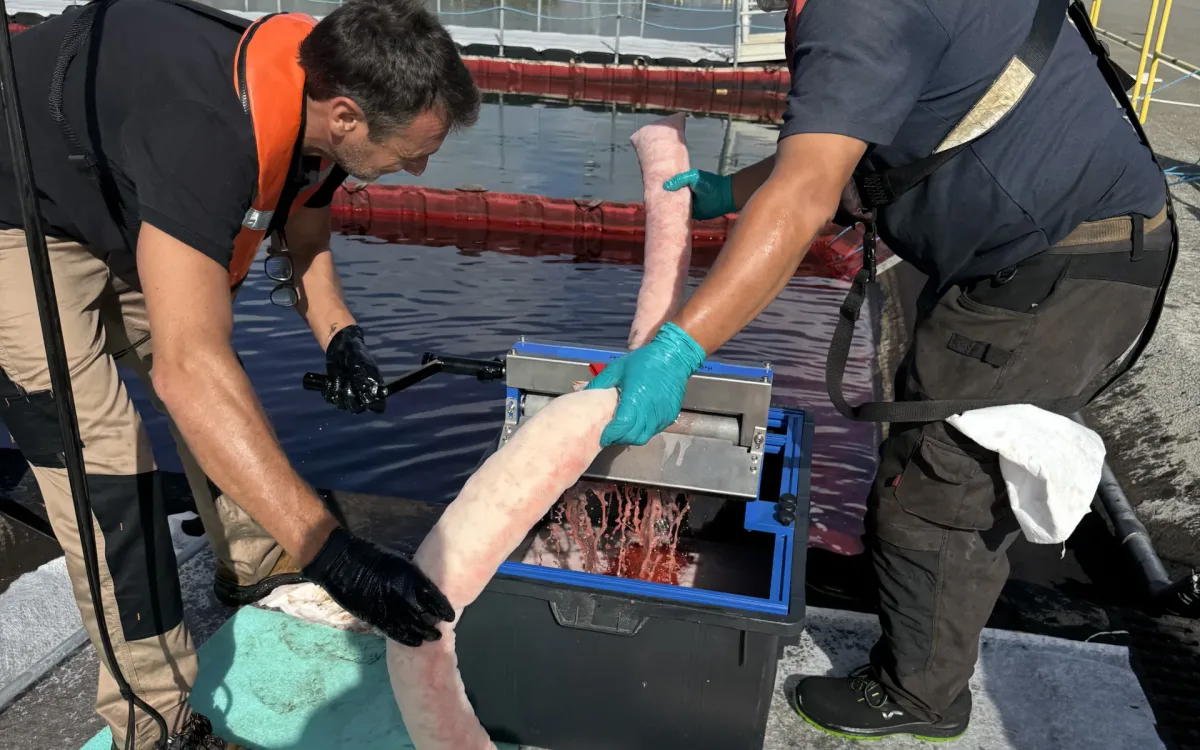
Particular attention was given to the recovery of absorbed contaminants, a factor that can significantly influence the overall management of a spill response operation. The ability to recover hydrocarbons and reuse absorbent materials helps reduce waste generation while improving the efficiency of remediation activities.

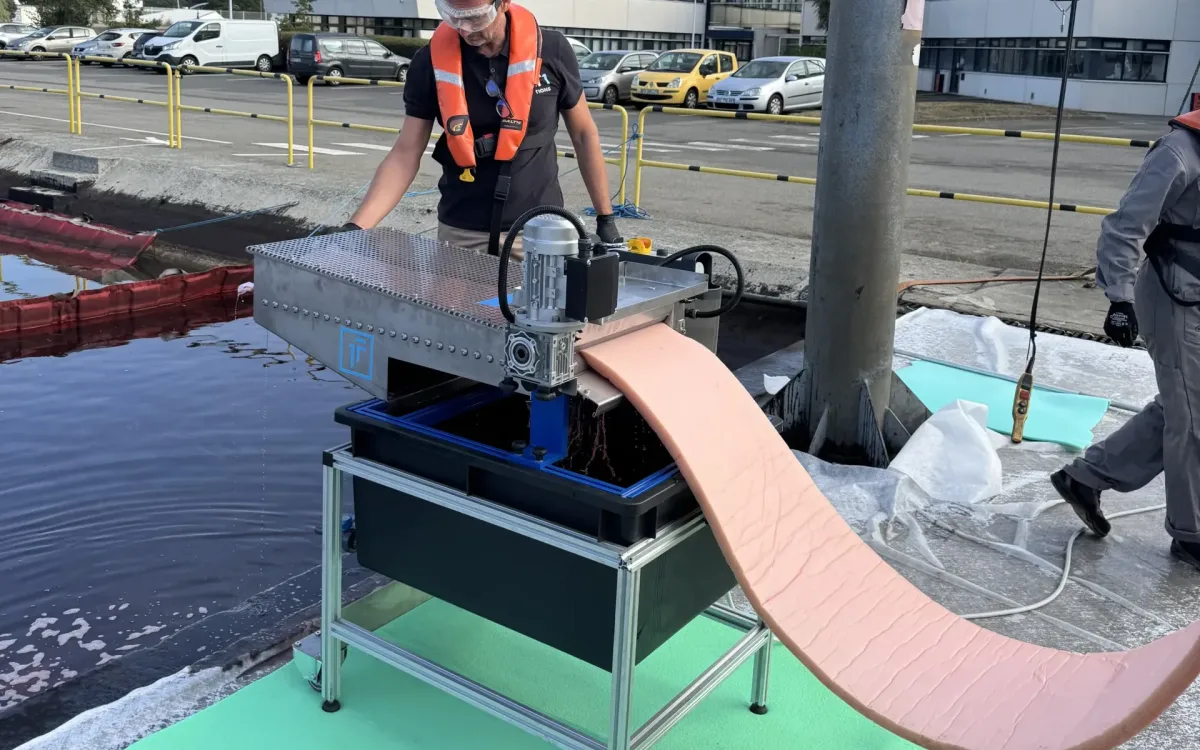
1
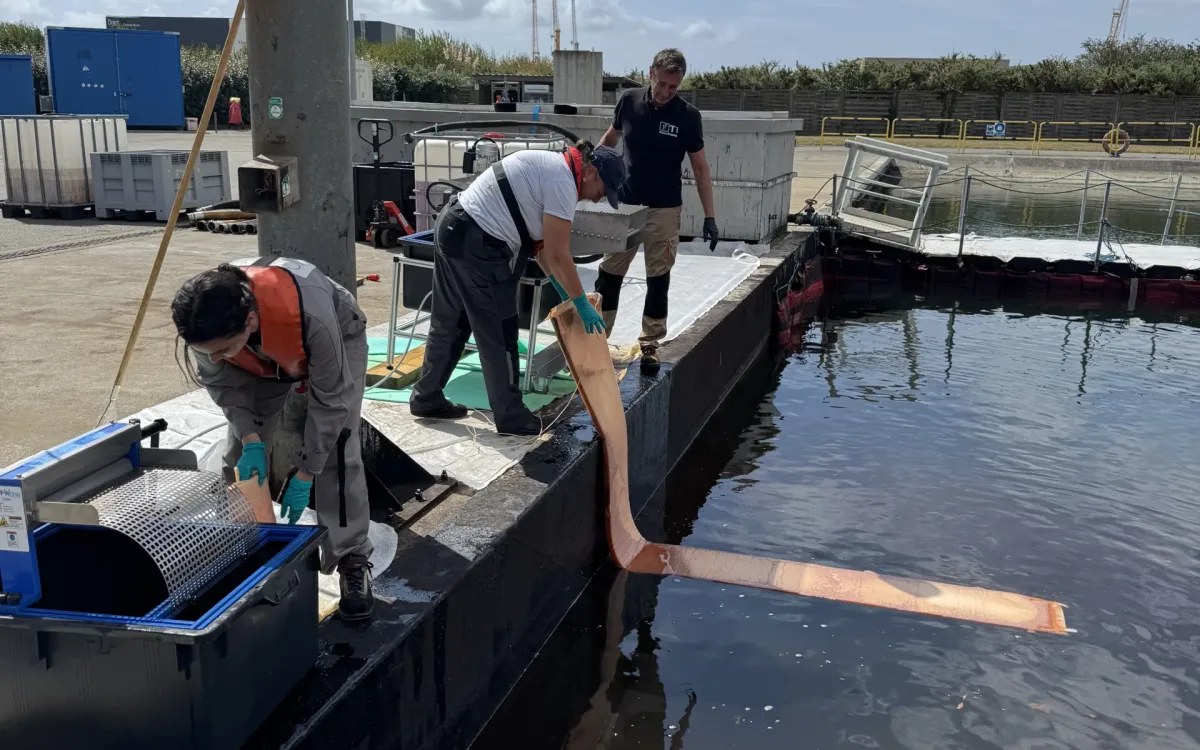
Wringing unit that separates the hydrocarbons
2
Absorbent strip fed through the unit
3
Controlled basin used for the tests
Field note · Reading the photo

The wringing unit (1) separates the hydrocarbon from the strip (2) coming out of the controlled basin (3). The test checks exactly this: if the contaminant separates from the absorbent, the product lasts longer and produces less waste.

Field note · Reading the photo

The wringing unit (1) separates the hydrocarbon from the strip (2) coming out of the controlled basin (3). The test checks exactly this: if the contaminant separates from the absorbent, the product lasts longer and produces less waste.

.Intervention

How were the absorbents tested?

Supported by the French Directorate General for Maritime Affairs, Fisheries and Aquaculture, with oversight from the National POLMAR/Terre Competence Center and additional support from TotalEnergies and the French Navy through CEPPOL, the program provided valuable insights into the role reusable technologies can play in modern oil spill response strategies.

A

Select brands and products

As part of the program, four different brands and multiple product configurations were evaluated, including absorbent sponges, carpets, sorbtubes, and towing systems.

B

Compare recovery methods

This approach enabled a comprehensive comparison of different hydrocarbon recovery technologies and methodologies, assessing their effectiveness, operational practicality, and compatibility with modern environmental response protocols.

C

Test FoamFlex behavior

Within the testing program, FoamFlex underwent dedicated evaluations to assess its behavior in water, its ability to retain hydrocarbons, and its potential for repeated reuse following recovery operations.

.Results

What did the tests show?

Reusable alternative

The results highlighted the value of reusable absorbents as an innovative alternative to traditional single-use solutions, demonstrating significant operational advantages.

Performance confirmed

The trials confirmed the performance of FoamFlex technology in terms of absorption efficiency, hydrocarbon recovery capability, and material reusability, as assessed during the program.

Less waste

The ability to separate the contaminant from the absorbent material and extend the product lifecycle emerged as one of the system’s key strengths, contributing to reduced waste generation. The Cedre experience confirms that FoamFlex can contribute to a more efficient approach to environmental emergency management, with absorbents that are wrung out and reused, offering a practical solution for organizations involved in hydrocarbon spill preparedness and response.

.Products used

Which products were used?

FoamFlex Carpet 2.0, SorbTube and Single Sponge h 1cm.

Reusable

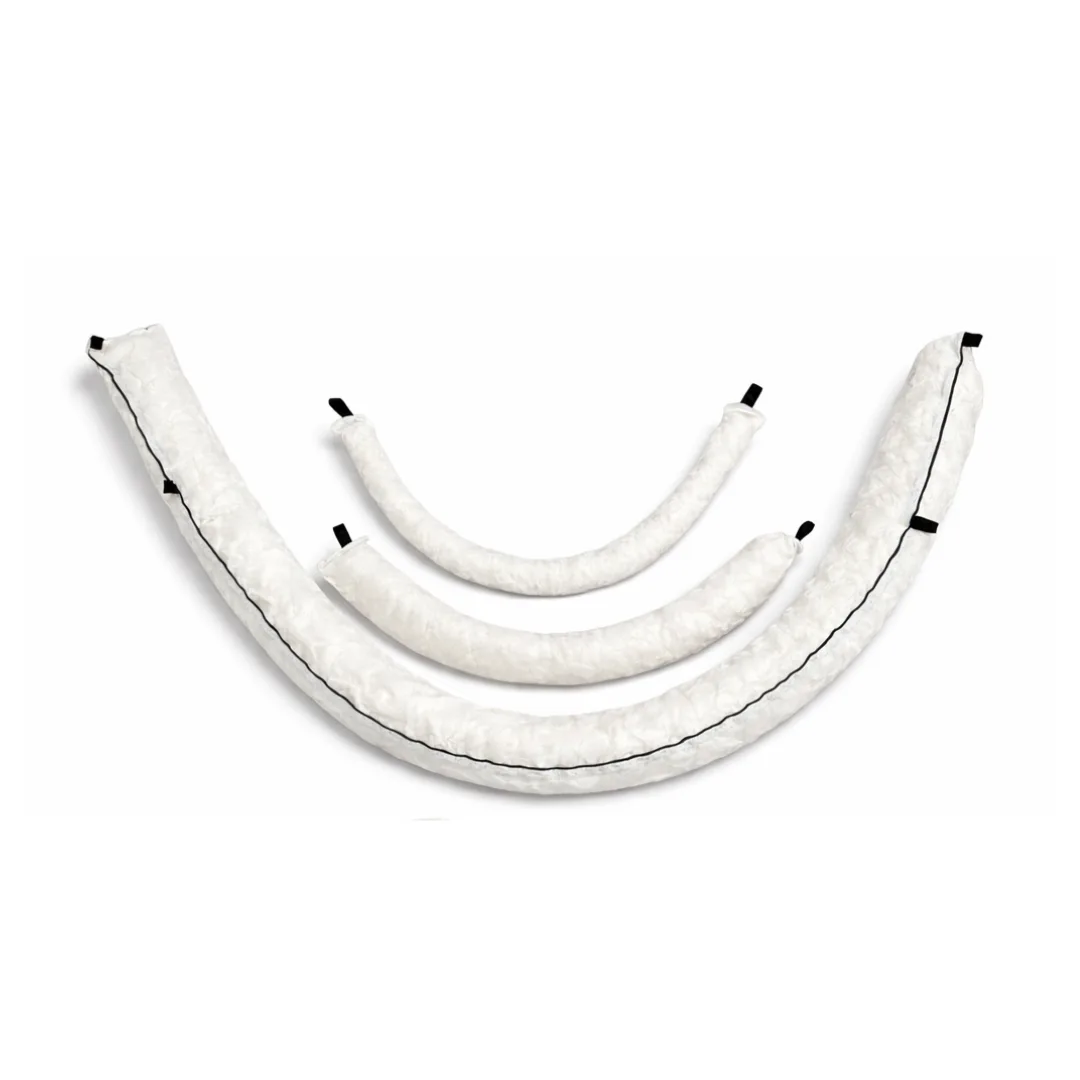
High-capacity absorbent sock for oil containment in industrial or marine areas, available in three different sizes.

Price range: 71,98 € through 193,98 €incl. VAT
Reusable

Reusable sponge that absorbs oil only, not water. Clean, efficient, and reusable.

Price range: 6,34 € through 107,36 €incl. VAT
Reusable

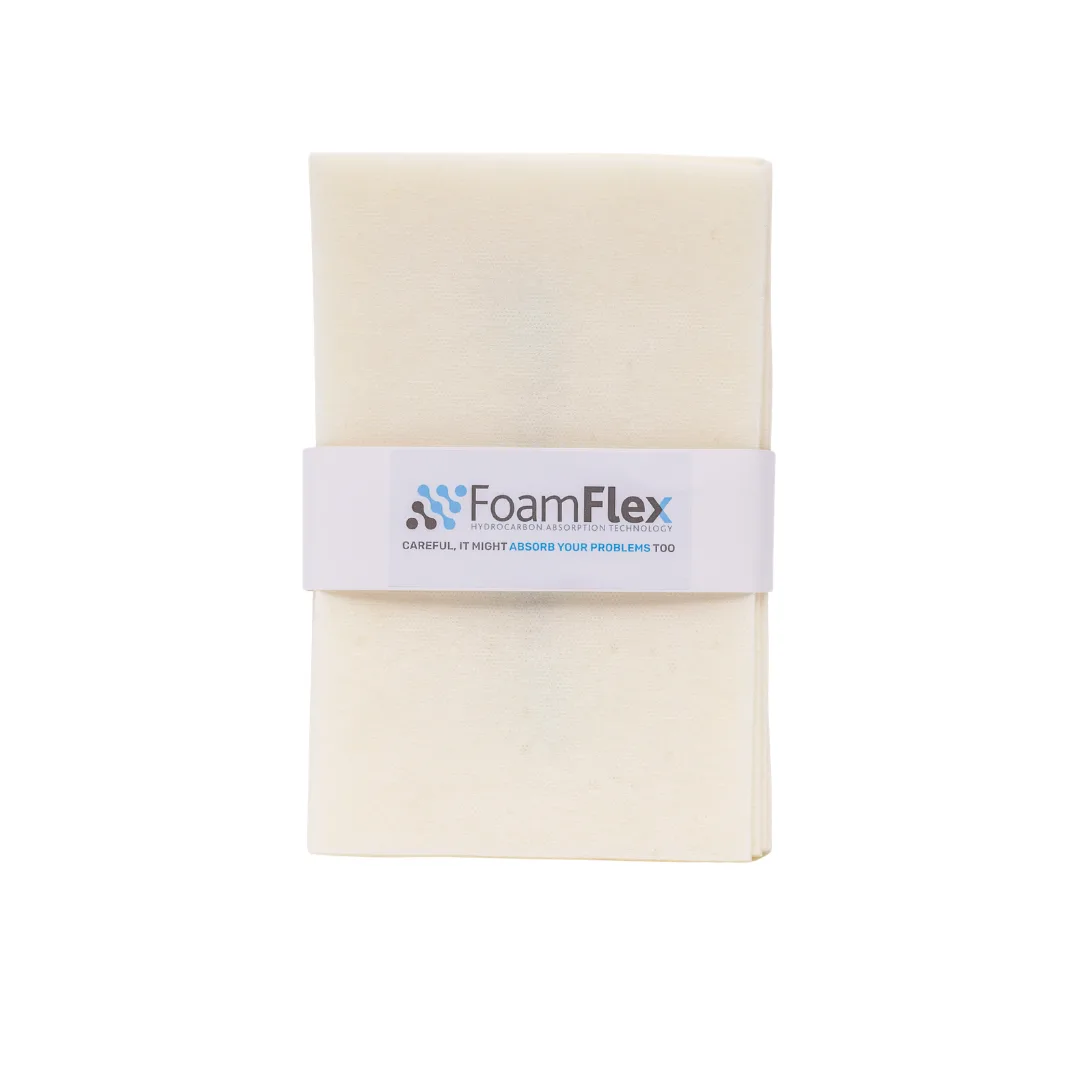
Reusable absorbent carpet with velcro and handles, ideal for all types of spills and compatible with FF-WRING.

Price range: 156,16 € through 268,40 €incl. VAT
.FAQ

Frequently asked questions

Beyond absorption capacity, the tests covered ease of deployment, buoyancy, mechanical resistance, material durability during use, and the ability to separate absorbed hydrocarbons from the absorbent media.

Four different brands and multiple product configurations were evaluated, including absorbent sponges, carpets, sorbtubes, and towing systems.

Because the hydrocarbons can be recovered and the absorbent materials reused, which reduces waste generation and improves the efficiency of remediation activities.

.Related cases

More case studies

Talk to us about your own spill response

A T1 Solutions specialist helps you choose the right products for your site.